What happened to the Introdex startup: Admet Akhter on the startup and the transition to Freedom Holding Corp.
In an interview, Admet Akhter, CEO and co-founder of Introdex, explained why the project failed to scale and what challenges he faced during fundraising in the Asian and US markets.
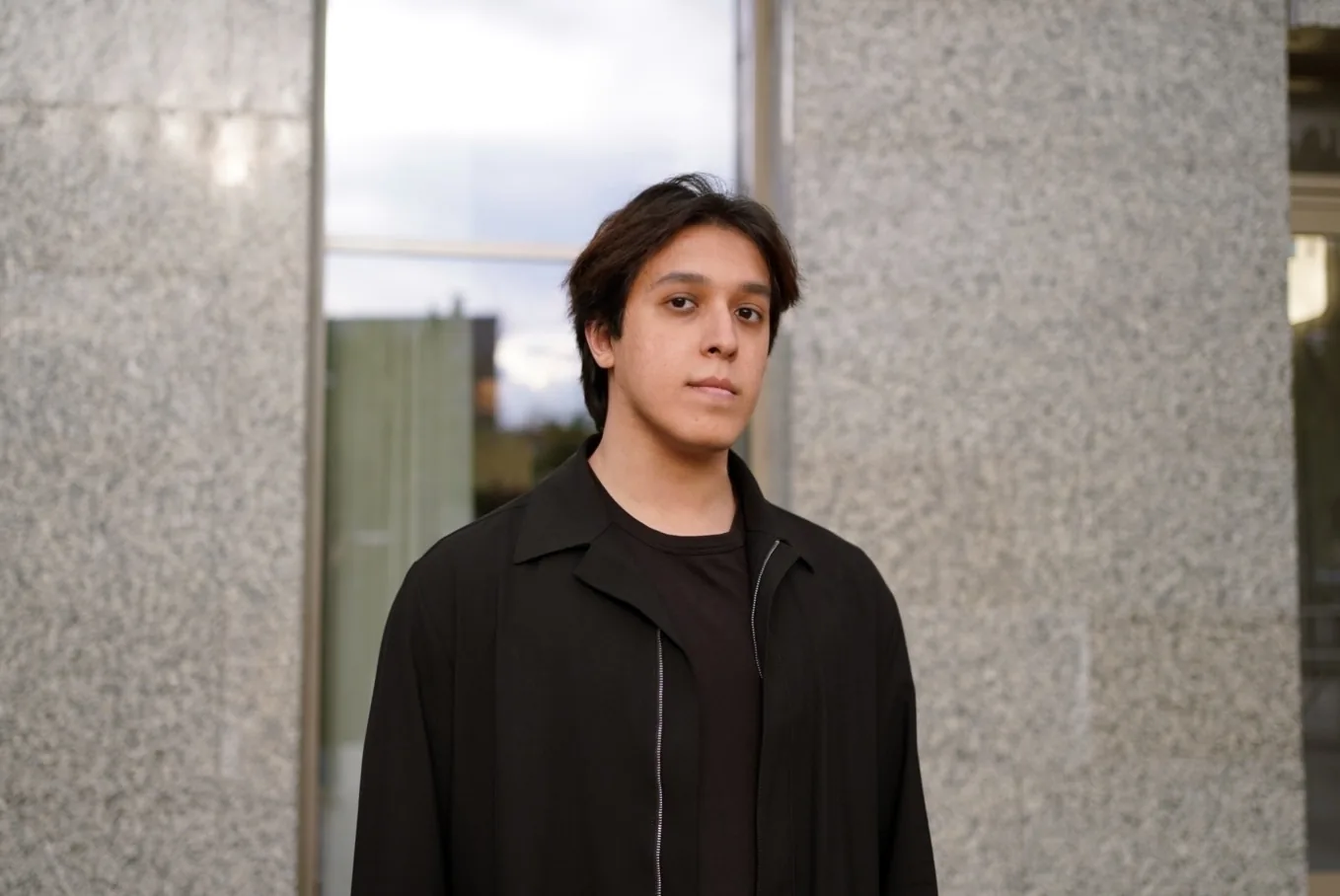
Admet Akhter, city — Almaty, IT entrepreneur, Instagram
About Introdex
Introdex solved a problem for vendors—providers of services or solutions targeting the enterprise segment. The sales cycle in this sector is built on warm introductions and referrals, and to get them, you either need to build connections over years or find people who already have them—the so-called connectors. On our platform, vendors specified which corporations they needed warm access to, as well as what compensation they were willing to offer for a successful deal or meeting. The most acute problem exists in Asia, where relationships play a key role, and the market is particularly attractive to American and European vendors.
The startup was launched in early 2023, when AI was just at the beginning of the hype cycle, and the start of a venture winter was also observed. The startup itself was born in the largest global accelerator, Antler, at its Singapore location. We were among the top teams in our cohort, and among the startups from the last few cohorts of Antler, only we attracted the attention of Peak XV. We went through many iterations and dialogues with them and were close to receiving a large check and closing the Seed round, but it didn’t happen. Mostly, we closed the round with small checks from Kazakhstani funds and international angels. Later, we made it to the semi-finals of the Llama incubator, where only 20 startups from the region were selected.
Reasons for suspending the project
We still believe in our model and understand that we failed to achieve fundraising goals, and developing such a project requires more funding, similar to US counterparts. The main signal was that customers were upset by our shutdown, and they have no alternatives in the Asian market. It is quite possible that someone else will enter the Asian market and solve this problem, making significant money from it.
Naturally, investors were upset. However, this outcome was expected for many—they see how difficult it is for founders to attract investments now, especially at the seed stage, when there is already traction and facts, but expectations for metrics have grown exponentially.
A certain gap emerged: there is more capital for startups at the Series A+ stage, but fewer startups actually reach this stage. Being a founder from Kazakhstan also makes it difficult to attract international capital where you are practically an “outsider,” and your reputation has not yet been established. Overall, the market has changed significantly over the last three years: AI has substantially transformed processes and approaches, and the geopolitical situation has become less stable.
Current stage of Akhter Studios development
Acquihire happened with Akhter Studios by Freedom. This is a format where the team is hired into the company, and the business and its activities are completely shut down—there was no actual sale of the company. Over the last three years, this format has become popular in the global market: cohesive teams with experience become a valuable asset where speed is important. Along with the studio team, I also joined this transition due to the shutdown of Introdex.
Main takeaways
One of the key mistakes was entering the market without local presence and a strong foundation in the region. We took on solving a problem that had no established analogs abroad and which caused skepticism in the Asian market because it is more conservative. At the same time, founders from the US of significant caliber with multiple exits received Pre-Seed/Seed rounds up to $10 million and had a quick start.
It also happened that we pitched to funds in Singapore and Southeast Asia, but they were skeptical about both the problem and the solution, and then invested in a similar product in the US shortly after—because they followed other funds and investors who saw an opportunity there and took a risk despite the lack of analogs. As it turned out, startups and products in the sales sphere, as well as investors working with them, are mainly formed in the US.
It also wasn’t immediately obvious that the lack of a foundation in the region—warm connections or established reputation—closes many doors. One of the lessons was understanding that any achievements outside the region are not always perceived as a base. If my co-founder Jacob was treated more seriously due to his Danish origin, then Shamyl and I were seen more as people who could pack their bags and leave with money tomorrow. This is usually said in informal settings when people can be most candid.
Only in a startup do you begin to understand how important key team members and their experience are. It was working side by side without a large team that, unlike Akhter Studios, provided many insights. During our work, we parted ways with one of the co-founders—we realized we had different ambitions and it was better to move forward separately.
However, this courage—to launch a product in a region unfamiliar to Kazakhstani people, to take on a complex, not simple problem, to go against the venture winter—is something I don’t want to lose with experience, even if it may seem irrational from the outside. But it is this quality that largely determines the level of a founder. This is also what experienced investors value: the venture market is about courage and multiple x’s, not about careful and predictable business. This requires a corresponding type of thinking.
Next step
Singapore is the second country in the world after the UAE in terms of AI penetration among the population, and the state actively supports initiatives for its implementation. The last three years spent there gave me an understanding of what Kazakhstan could become—and quite soon, with the right strategy and execution.
In the coming years, I would like to focus on participating in this transformation from the market side. At the same time, the largest amount of resources for this is concentrated not with startups and service companies, but with large corporations with big ecosystems. With Freedom, our goals and tasks intersected, and with the corporation itself, we had already worked on projects as vendors, being in Akhter Studios. Among the employees of different companies in the holding, there are also our people, so the contact was already quite warm and dense from all sides. In the end, we agreed.
Now my goal is to make our AI assistant a useful product for Kazakhstani people that meets their daily needs more conveniently and efficiently. Thanks to the resources of the ecosystem and technologies, this is more than possible.
Recommendations
The market is changing so rapidly due to AI that it needs constant monitoring. Planning for a long horizon is becoming more difficult.
It is important to think through the prism of market transformation: will the product be in demand considering trends? Or will the task be fully automated by AI in the future, or will users be able to assemble similar solutions themselves? In this sense, startups are closer to hardware and infrastructure products, which are more deeply embedded in users’ lives and are harder to automate or quickly replace.
Founders should think about flexibility and high speed of delivering value to the market from day one, as well as the ability to quickly change the product. If this is not achieved, you may simply not have time to adapt and lose value.
Social capital remains an important asset for founders, so it should be treated carefully. In conditions of high market uncertainty, it remains one of the key factors in fundraising.
The Tech on Telegram Follow The Tech on Telegram
Keep up with the latest technology and startup news.
Related reading



More from this author

Article Useful
How to protect your accounts from hacking: 8 settings you should check today
The Tech

Article Useful
500 Global: How the Accelerator Works and Who Can Receive Investments
The Tech

Article Interviews
Game Development in Central Asia: Arkady Moldavski on Developing Reverb and the Growth of the Industry
The Tech

Article Useful
Google, Tesla, BlackRock, and the IMF: Where to Apply for an Internship in Fall 2026
The Tech

News IT
Tesla unveiled the flying electric car Roadster
The Tech

News IT
Intero Biosystems startup won the Startup Battlefield at TechCrunch Disrupt 2026
The Tech