What Y Combinator and a16z are looking for in founders today, and how to achieve it
At the Global Tech Tashkent conference, Yasir Ehsan, a startup scout at A16Z, presented the session “What YC and a16z Look for in Founders Today and How to Get There,” where he explained how today’s largest accelerators and venture capital firms select startups, which signals they consider key, and why the decisive factor is no longer technology but the market.
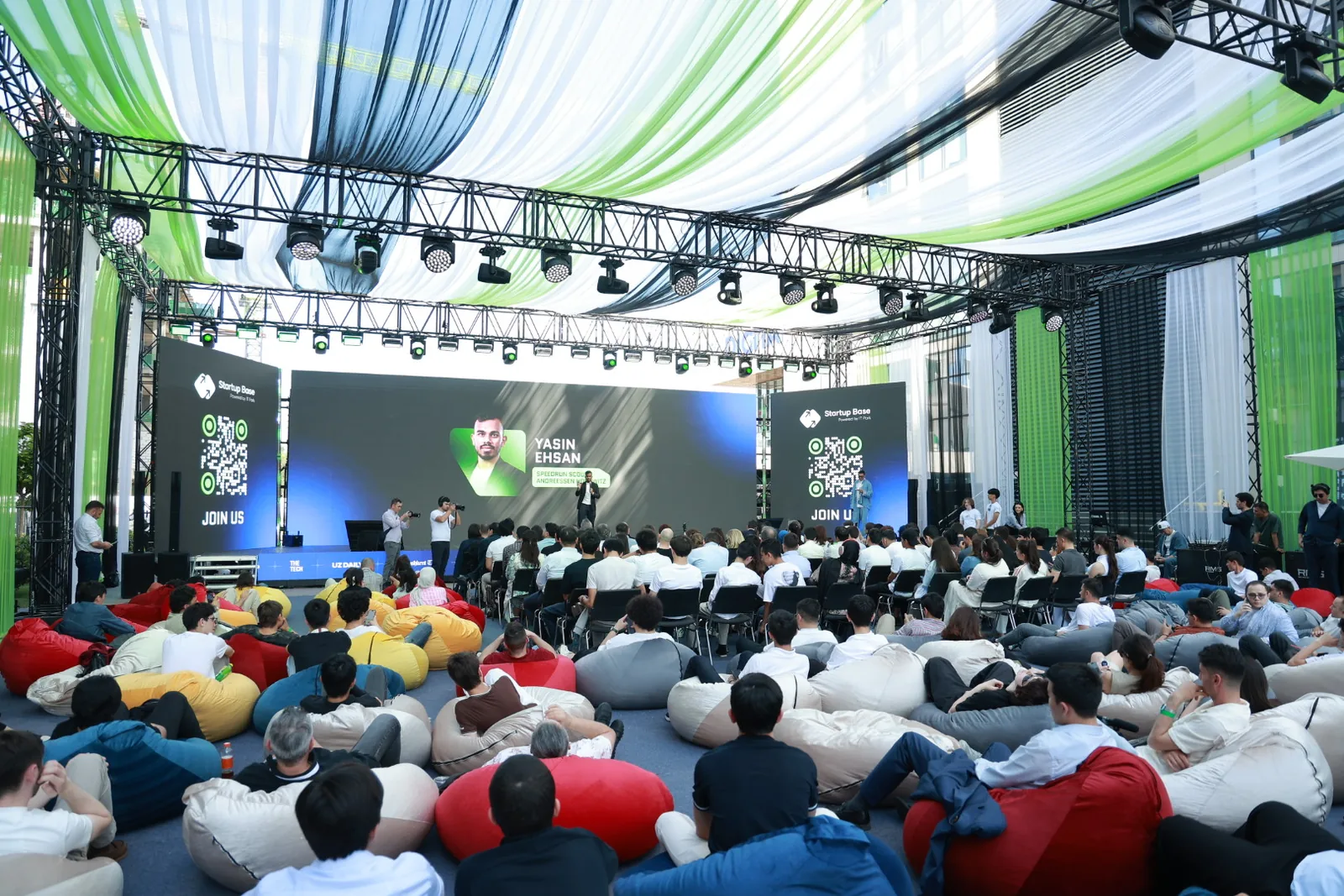
Yasin Ehsan, Startup Scout at a16z, LinkedIn
Sardor is one of the founders who moved to Powell Street in San Francisco. Over the past year, something special has emerged on Powell Street: 10 companies from a single location have either been accepted into Y Combinator or received funding from a16z Speedrun. Each of them has its own unique story.
Sardor’s story is this: he left his comfortable life in New York and moved to San Francisco. One day, he approached my roommate and said, “I’m ready to apply to YC.” Great. Let’s look at the application together. We opened it, and I told him straight out: “Sardor, you’re a very smart person, but this application won’t pass.” We spent six hours breaking it down piece by piece, completely rebuilding the idea and finding the right market to focus on.
Because it’s not about the technology. It’s about the market.
A startup almost never ends where it began
About six months ago, I made one of my first angel investments. It was Sean — he was selling data to robotics companies. Today, he is building real robots that pick strawberries. And he is part of the current Y Combinator batch.
I’m not angry at him for completely changing his idea. This is part of the startup journey. The way you arrive at the finish line never matches the way you started.
Which market to choose right now
You might ask: which markets should we focus on? If I am a founder, investor, or ecosystem participant — what is relevant today?
If you look around, if you open the news, you will see the decline of one specific business model — SaaS, Software as a Service. And at the same time, you will see the birth and normalization of a new paradigm — service as software. AI agentification of various workflows.
Service as software is when software stops being a tool and starts doing the work instead of a human.
It is estimated that this market will be three times larger than the entire cloud market. If the entire cloud market is worth $500 billion, then the service as software and AI-verticals market represents a $1.5 trillion opportunity.
Within this direction, there is a huge number of niches. Physical intelligence. Computational biology. Regulated industries. Government systems. The opportunities are incredibly numerous — because again: it’s not about the technology. It’s about the market.
What YC and a16z specifically look for in founders
I am close to founders who constantly get into these programs. I get pitched, maybe five times a day. So I know something about what it takes to get in.
For those who don’t know: Y Combinator is a program in San Francisco where you receive $500,000 for 7%. The a16z Speedrun program is similar, where you receive $1 million for 10%.
First and foremost — your personal background
You need to be exceptional. Exceptional in at least one category. You can be the best swimmer, the best gamer, the best academic, work at the best companies — today that might be OpenAI. You must show that you are absolutely the best at one specific thing, and signal this as quickly as possible.
The less you talk, the louder what you have done speaks. That is the first point.
Second — you need traction
You must show that in the first month after launching the startup, you reached $5,000 in monthly recurring revenue. If you have a strong background and can reach $5,000 MRR in the first month — you are already far ahead of everyone else.
Each program receives between 10,000 and 30,000 applications. Only 100–200 teams are accepted. You must do absolutely everything to stand out.
Third — the market
After background and traction, the decisive factor becomes the market.
Look at the history of Silicon Valley. In the 1970s, it was called Silicon because of the great chip manufacturers — Intel and IBM. In the 1980s, personal computers arrived. In the 1990s — the internet. Then — web applications and mobile applications.
And today we stand on the threshold of something very interesting. When will AGI arrive?
Recently, I was at the Anthropic office in San Francisco. I spoke with one of the researchers and asked him, “What do you think about AGI?” He replied, “Yasin, my job will disappear very soon.” I said, “How? Why do you say that? Is this marketing?” He answered, “No. The next generation of models that Anthropic will release will be able to train future generations of models.” And when that happens — AGI will arrive.
So if you are building a startup and can find your niche before AGI arrives or find a game that incorporates the acceptance of AGI — that is exactly the market you need to focus on. Again: it’s not about the technology. It’s about the market.
The main call to action
We need to AI-ify this country. What does that mean?
It means building infrastructure. It means creating opportunities for other people. It means being bold, audacious, and turning your ideas into reality.
Everyone has a heart. If you are a founder — go after your startup idea. Build in Uzbekistan. Enter international markets. Ask for help. Want to become great — become great.
If you are an investor or ecosystem participant — do everything possible to copy the best. Look at the best investors and how they invest. Incorporate this into your playbook. Inspire founders to share their signal. Inspire founders to become the best storytellers. Inspire founders to make the riskiest bets of their lives.
Because: it’s not about the technology. It’s about the market.
The Tech on Telegram Follow The Tech on Telegram
Keep up with the latest technology and startup news.
Related reading




More from this author

Article Useful
How to protect your accounts from hacking: 8 settings you should check today
The Tech

Article Useful
500 Global: How the Accelerator Works and Who Can Receive Investments
The Tech

Article Interviews
Game Development in Central Asia: Arkady Moldavski on Developing Reverb and the Growth of the Industry
The Tech

Article Useful
Google, Tesla, BlackRock, and the IMF: Where to Apply for an Internship in Fall 2026
The Tech

News IT
Tesla unveiled the flying electric car Roadster
The Tech

News IT
Intero Biosystems startup won the Startup Battlefield at TechCrunch Disrupt 2026
The Tech