ChatGPT has launched a personal finance tool — you can now connect your bank account.
OpenAI has launched a new financial tool within ChatGPT: users can connect their bank and investment accounts and receive personalized answers to questions about money. Let’s take a closer look at what the new tool can do and who it is for.
What was launched and when
On May 15, 2026, OpenAI introduced a personal finance toolset in preview mode. It is currently available only to ChatGPT Pro subscribers in the United States. The core concept: connect real financial accounts and gain an AI assistant that understands your actual financial context.
How it works
OpenAI has integrated with Plaid, a standard fintech intermediary long used in most American banking applications. Through this integration, ChatGPT gains access to data from more than 12,000 financial institutions, including Schwab, Fidelity, Chase, Robinhood, American Express, Capital One, and others.
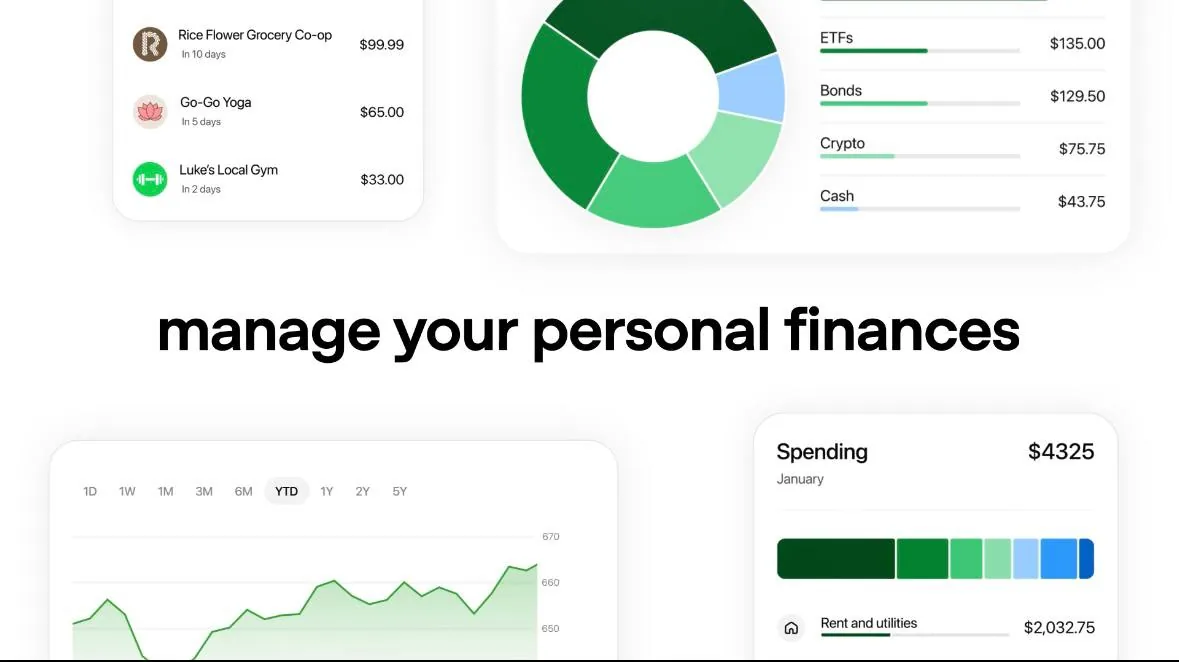
After connecting accounts, users see a dashboard with:
— investment portfolio performance
— spending by category
— active subscriptions
— upcoming payments.
Accounts can be connected in two ways: via the ChatGPT sidebar menu → “Finances” → “Get started,” or directly in the chat by typing @Finances, connect my accounts.
What questions can be asked
The key difference between this new tool and standard ChatGPT is that it knows about your money—not in general terms, but specifically: how much you spent last month, which subscriptions are active, and how your portfolio is performing.
OpenAI provides two examples of queries now made possible:
— “I feel like I’ve been spending more lately. Has something changed?”
ChatGPT will analyze real transactions and indicate which spending categories have increased and when this trend began.
— “Help me create a plan to save for a home purchase in my area within five years.”
The model will consider your current income, expenses, and portfolio, rather than offering generic advice like “save 20% of your salary.”
Previously, ChatGPT answered financial questions like an encyclopedia—providing general advice without understanding your specific situation. Now, it responds like a personal financial advisor with access to your statements.
Why this matters
OpenAI revealed a figure that explains why such a product is being launched: every month, over 200 million users already ask ChatGPT about finances. People are already using it as a money advisor—but until now, the model answered blindly, unaware of any individual’s income, expenses, or assets. This new tool bridges that gap.
The company also highlighted the role of the GPT-5.5 model. It was specifically trained on financial questions: OpenAI collaborated with domain experts and created a dedicated benchmark to evaluate answer quality in this field. According to the company, GPT-5.5 significantly outperforms previous versions in reasoning tasks where context is crucial—and in financial matters, context is everything.
How OpenAI got here
A month before launch, in April 2026, OpenAI acquired Hiro, a fintech startup focused on personal finance, backed by Ribbit, General Catalyst, and Restive. The Hiro team brought specialized expertise in this domain to OpenAI.
OpenAI didn’t just add a feature; it strategically acquired a team that already knew how to build financial AI products.
Future plans include integration with Intuit, the company behind TurboTax and QuickBooks. After this, ChatGPT will be able to answer significantly more complex questions: for example, how selling stocks might affect your tax return, or what your chances are of getting approved for a new credit card given your financial history.
Privacy and data management
Access to bank accounts is always a matter of trust, and OpenAI understands this. The company has implemented multiple levels of user control.
Connected accounts can be disconnected at any time via Settings → Apps → Finances. After disconnection, ChatGPT does not retain data indefinitely: synchronized financial information is completely deleted from the system within 30 days.
“Financial memories”—what the model has remembered about your finances during conversations—are managed separately. These can be viewed and manually deleted directly on the Finances page, giving users full control over what ChatGPT knows about them.
Who has access now
At launch, the tool is available in two formats: the web version of ChatGPT and the iOS app. Access is restricted to ChatGPT Pro subscribers in the United States, which is OpenAI’s most expensive tier.
This limited rollout is a deliberate decision. OpenAI wants to first gather feedback from its most engaged users, refine the product based on that input, and only then open access to Plus subscribers.
The Tech on Telegram Follow The Tech on Telegram
Keep up with the latest technology and startup news.
Related reading




More from this author

Article Useful
How to protect your accounts from hacking: 8 settings you should check today
The Tech

Article Useful
500 Global: How the Accelerator Works and Who Can Receive Investments
The Tech

Article Interviews
Game Development in Central Asia: Arkady Moldavski on Developing Reverb and the Growth of the Industry
The Tech

Article Useful
Google, Tesla, BlackRock, and the IMF: Where to Apply for an Internship in Fall 2026
The Tech

News IT
Tesla unveiled the flying electric car Roadster
The Tech

News IT
Intero Biosystems startup won the Startup Battlefield at TechCrunch Disrupt 2026
The Tech