Alisher Elyubayev, CEO of Halyk Market, on the company's transformation, AI, and new opportunities for e-commerce
In an interview with The Tech CEO, Halyk Market's Alisher Elybaev discussed how the marketplace is changing its strategy, transitioning from a banking structure to a product model, and preparing to expand beyond the Halyk ecosystem. He also spoke about new e-commerce verticals, AI development, cross-border trade, plans to bring Kazakhstani goods to international markets, and the skills that will be in high demand in the coming years.

The Tech AI
Get the key points in seconds - a short summary from The Tech AI.
Alisher Elyubayev, CEO of Halyk Market (Almaty), leverages 5 years of e-commerce experience to scale the marketplace. The company is developing logistics, AI agents, and cross-border trade with China, Turkey, and South Korea. The strategy includes expanding beyond the "Halyk" ecosystem, entering new verticals (automotive, real estate), and supporting "Made in Kazakhstan" in collaboration with the "Baiterek" holding and the "DAMU" fund.
Alisher Yelyubayev, city — Almaty, CEO Halyk Market, LinkedIn
About Me
I am from Astana and studied at the Kazakh-Turkish Lyceum. I have two higher education degrees: the first is technical, and the second is in corporate governance.
I have dedicated most of my life to IT. In parallel, I was involved in various IT startups: sometimes as a mentor, sometimes as a founder or co-founder. There were also investment projects in which I invested. Therefore, I have quite diverse experience as an investor, entrepreneur, startupper, and employee: I have worked as CEO, CTO, business owner, and independent board director.
Over the last 15 years, I have encountered marketplaces four or five times in my professional and entrepreneurial activities. Some projects were unsuccessful, others were successful but quite local. Halyk Market became a great opportunity for me to implement a large-scale e-commerce product.
When I was offered to lead Halyk Market, it was an opportunity to complete the unfinished experience of creating a large-scale marketplace. Currently, my area of responsibility covers the entire marketplace: the technical part and creating a stable platform, the product part—creating a service that meets the expectations and needs of buyers and sellers, as well as promoting Halyk Market.
The marketplace itself has been on the market for about five years. It has regular customers, and new ones keep coming, but so far it has not occupied a full-fledged and clear role in the Kazakhstani market. Therefore, my main task is to build a strategy and assemble a team that will help define this role and take its position in the market.
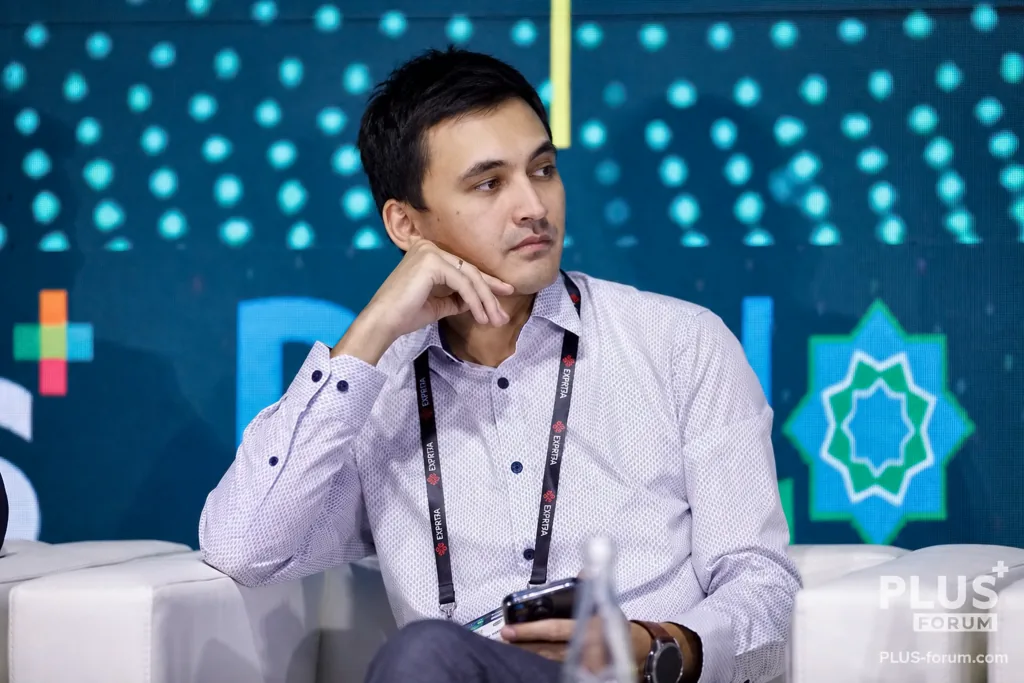
On Leadership and Results
Leadership is primarily the ability to assemble a team that shares big goals and interacts well with each other. It is important to establish unified goals and properly motivate the team so that it understands how to achieve them.
A leader is a person who knows how to set goals correctly, motivate the team, and lead it to results.
In the current situation, for me, the indicator of a successful result is primarily the team. The main task now is to define a broad strategy and motivate the team so that everyone understands why they are doing this and what result we want to achieve.
But, of course, secondly, it is numbers. Emotions are good, but results must always be reflected in metrics. For us, the key metrics now are the level of customer and seller satisfaction. It is they who show whether Halyk Market is moving in the right direction.
Halyk Market Today
Currently, Halyk Market is a marketplace within the Halyk ecosystem, but strategically we are developing it as a full-fledged independent commercial business, open to the entire market.
One of the key areas is logistics: fulfillment, sorting centers, and own services. For example, our parcel lockers are already used not only by Halyk Market but also by other logistics companies on a paid basis. We have also launched express delivery and direct delivery from China—a separate cross-border trade direction that Kazakhstani marketplaces did not have before.
At the same time, we have a strong base in the form of the Halyk ecosystem. We are located within the application and have access to a large audience, and customers can use banking tools—installments and loans. The 0-0-24 installment plan is available year-round.
Another important advantage is the Halyk Plus program: active users of the ecosystem can receive bonuses of up to 20%.
Another key difference of ours is our work with sellers. As a subsidiary of the bank, Halyk Market complies with regulatory requirements and carefully checks sellers. Therefore, we can ensure a higher level of trust from buyers and fundamentally work only with the white market.
In the future, we want to go beyond the Halyk ecosystem, work with other financial instruments and platforms. Therefore, today's advantages are only the base, and our strategic goal is much broader.

Technologies and AI in Halyk Market
We have three AI agents. The first one works for buyers—helps understand the request and select a suitable product. Currently, it is available to customers in Astana, and will soon be available to everyone.
The second agent works with sellers: helps find products, set prices, and in the future—create selling texts, select images, and design product cards.
The third is used internally within the company—for analyzing statistics, promoting products, recommendations, and other processes. In general, AI is actively used by us in development, design, and internal operations.
At the same time, I think that the main change AI will bring is precisely to the user experience. People are increasingly getting used to chats and voice interfaces, so over time, e-commerce will transition from static showcases to interaction through chats and voice assistants.
Already now, we are actively using ML for working with texts, search queries, and recommendations. Another trend that can significantly change e-commerce is sales through video streaming. In China, Korea, and Japan, this is already a very popular format, and it is gradually coming to us. I think live commerce will become one of the next major changes in the market.
Team
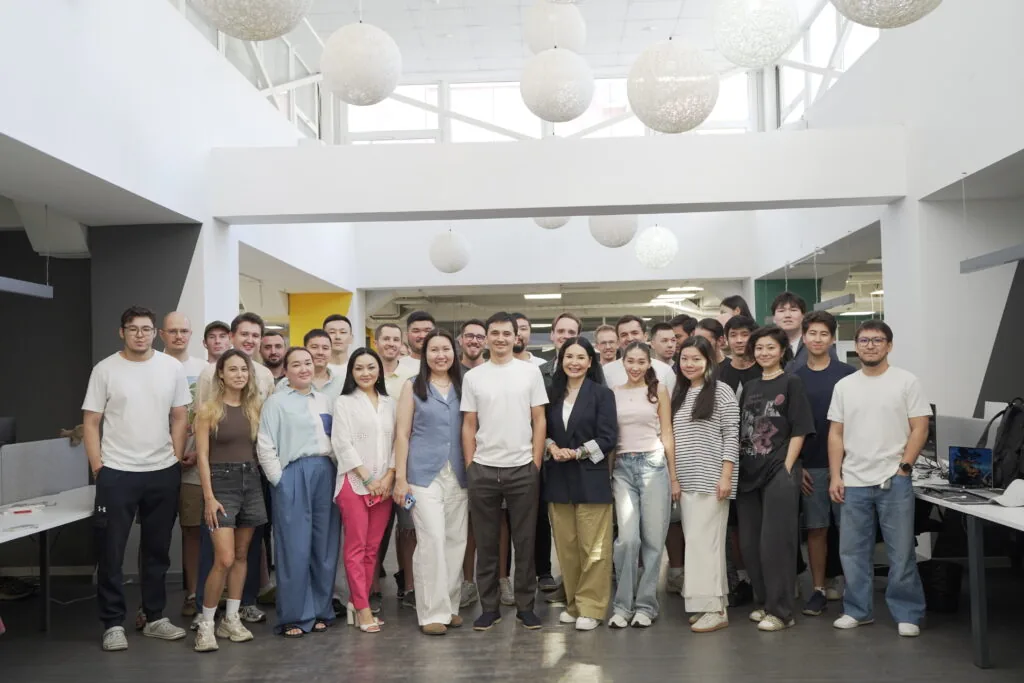
Initially, the Halyk Market team was built according to a standard banking structure. Now we have completely switched to a product model: we have separate streams and cross-functional closed-loop teams.
Now the team is responsible for the entire product—from idea to result, not just for a separate piece of code or process. Essentially, these are mini-companies within the company, which have their own areas of responsibility and necessary authority to make decisions.
Over the last three months, we have redistributed responsibilities, completed the teams, and switched from a banking organizational model to a product one.
With the advent of AI, AI and ML engineers are currently in particularly high demand. We also primarily hire developers with experience working with AI tools.
I do not believe that AI will replace developers—at least in the next few years. But already now, every employee should know how to use such tools. They do not so much replace people as allow them to significantly increase their efficiency. Therefore, one of the key skills is the ability to work with AI tools.
Another important trend is cross-functionality. We are gradually moving away from the model where a developer is responsible only for code, and a marketer only for marketing. Employees should understand the product, its goals, and metrics. A developer should understand product tasks, a marketer should understand numbers and the financial model. In the next 5-10 years, I think the ability to see and understand the work of the company as a whole will be especially valuable.
Plans
At the moment, one of the main priorities is to open Halyk Market to the entire market, so that it can be used not only by Halyk customers but also by customers of other banks.
We are also gradually expanding the assortment beyond local goods. We have already launched directions with direct supplies from Turkey and China, and in the near future, we plan to develop new verticals—including cars and real estate.
At the same time, we do not want to simply compete for the existing market. Strategically, the task is to create new e-commerce verticals where they are currently weakly developed or practically absent.
Another major direction is cross-border. On the one hand, we give the opportunity to buy products directly from China, Korea, Turkey, and other countries. On the other hand, we want to help Kazakhstani manufacturers enter foreign markets.
Together with the "Baýterek" holding and the "DAMU" Entrepreneurship Development Fund, we are developing the Made in Kazakhstan direction. The idea is that local manufacturers could sell their products not only within the country but also enter international marketplaces through our connections with foreign markets.
Growth begins where comfort ends
I increasingly see among young specialists the desire to find a company where everything is already built and works comfortably. But in fact, it is precisely in companies that are about to grow and where complex problems need to be solved that one can develop faster.
Therefore, my advice to young specialists is not to be afraid of complex projects and problematic companies. On the contrary, you should go where you can sort out problems, become stronger, and bring real results.
In the end, it is valued not so much the fact of working in a well-known company, but the experience of how you made it better. And, however paradoxical it may sound, the more problems in the company, the more opportunities to show your results.
The Tech on Telegram Follow The Tech on Telegram
Keep up with the latest technology and startup news.
Related reading



More from this author

Article Useful
How to protect your accounts from hacking: 8 settings you should check today
The Tech

Article Useful
500 Global: How the Accelerator Works and Who Can Receive Investments
The Tech

Article Interviews
Game Development in Central Asia: Arkady Moldavski on Developing Reverb and the Growth of the Industry
The Tech

Article Useful
Google, Tesla, BlackRock, and the IMF: Where to Apply for an Internship in Fall 2026
The Tech

News IT
Tesla unveiled the flying electric car Roadster
The Tech

News IT
Intero Biosystems startup won the Startup Battlefield at TechCrunch Disrupt 2026
The Tech