Next-generation AI: Why Recursive Superintelligence is called one of the most ambitious companies of the year
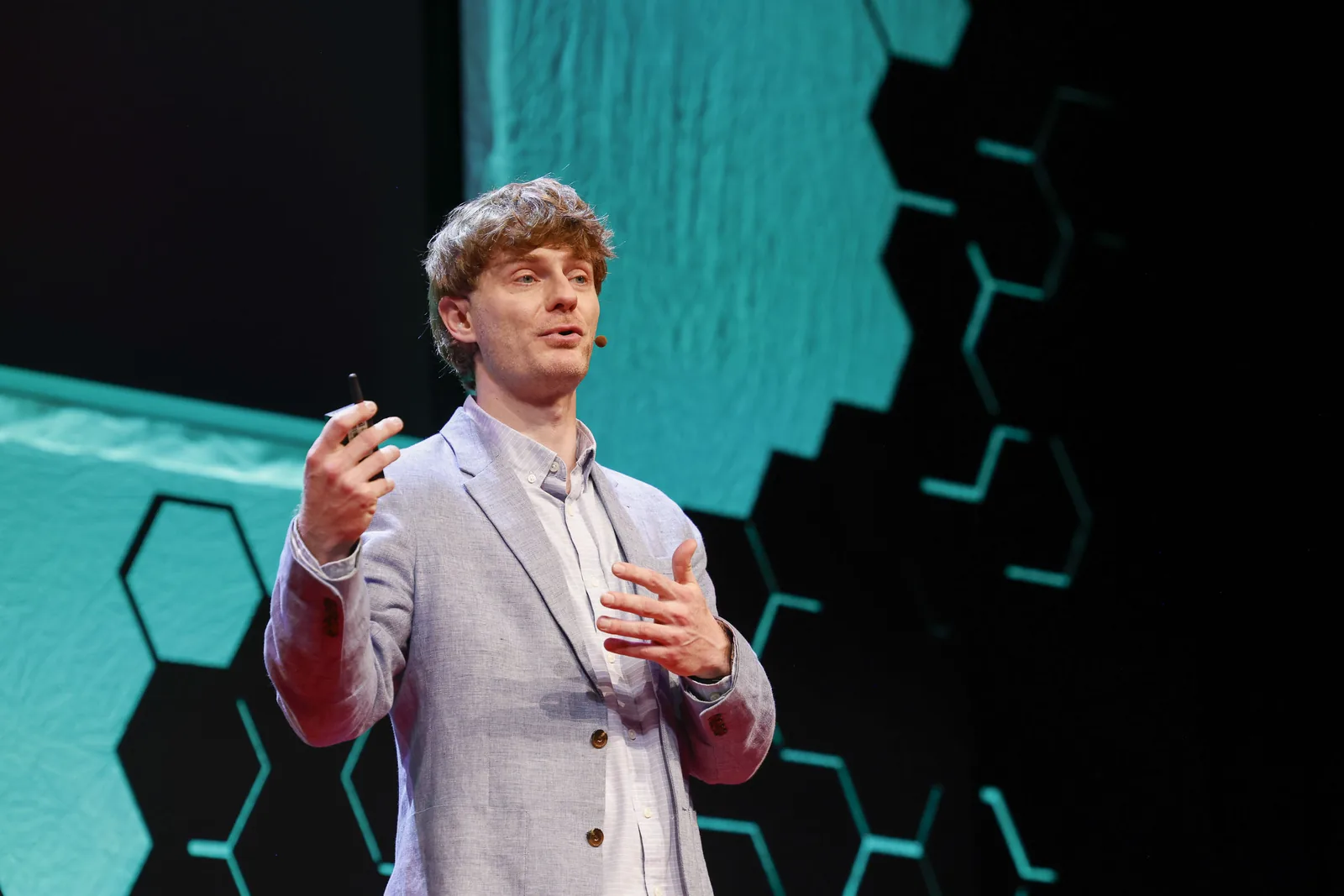
Richard Socher is one of the most prominent researchers in the field of artificial intelligence. He contributed to the development of ImageNet, founded the AI search startup You.com, and is now launching a new project called Recursive Superintelligence. The San Francisco-based company has emerged from stealth mode and secured $650 million in funding from Greycroft and GV.
Socher’s partners on the project include renowned AI researchers such as Peter Norvig and Tim Shi, co-founder of Cresta. The team is working on creating a recursively self-improving artificial intelligence model—a system capable of independently identifying its own limitations and refining itself without human intervention. Many consider this task to be one of the key goals of the modern AI industry.
What sets Recursive Superintelligence apart
In an interview with journalist Russell Brandom, Socher explained that the core feature of the company’s approach lies in using the concept of open-endedness to achieve true recursive self-improvement.
According to the researcher, many mistakenly believe that recursive self-improvement already exists—for example, when AI helps improve another model or edits text. However, Socher argues that this cannot be considered full-fledged self-improvement.
The main goal of Recursive Superintelligence is to create a system capable of fully automating the research process: from generating ideas and formulating hypotheses to testing them. In the initial stage, the focus is on AI research, but in the future, the technology could be applied to other scientific fields as well.
What open-endedness means
Socher also explained the meaning of the term open-endedness. One of the company’s co-founders, Tim Rocktäschel, previously led open-endedness and self-improvement initiatives at Google DeepMind and participated in the development of the Genie 3 model.
As an example, Socher cited biological evolution: species adapt to their environment, other species respond to these changes, and the process continues for billions of years. According to him, this mechanism underlies the gradual development of complex biological systems.
One practical example of applying this approach is the “rainbow teaming” technology used for stress-testing AI models. Instead of specialists manually devising scenarios of undesirable AI behavior, one model automatically tests another, attempting to provoke errors or dangerous responses. Through millions of iterations, the systems gradually improve.
As Socher noted, similar methods are already being used by major AI laboratories today.
Can recursive self-improvement be completed?
Responding to the question of whether there is an endpoint to such development, Socher stated that many self-improvement processes are potentially infinite.
In his view, there is always room for improving programming skills, solving mathematical problems, and conducting scientific research. Although theoretical limits to intelligence exist, the researcher believes that humanity is still very far from reaching them.
Not just research, but also products
Socher also emphasized that Recursive Superintelligence does not intend to remain solely a research laboratory. According to him, the company plans to create full-fledged products that people will use in their daily lives. He noted that the team combines strong research expertise with experience in building successful technology companies.
For instance, Tim Shi previously led the growth of Cresta, while Josh Tobin was one of OpenAI’s earliest employees and led the Codex and Deep Research teams.
When will the first products appear?
According to Socher, the project is progressing faster than expected, so the first products could appear in the coming quarters rather than in a few years.
Socher also addressed the issue of computational power. He agreed that the development of recursively self-improving systems is directly linked to access to large-scale computing resources.
In his opinion, one of the key questions in the future will be the allocation of computing resources among various scientific and social tasks. For example, which problems humanity will prioritize solving and how many resources will be required to address them.
The Tech on Telegram Follow The Tech on Telegram
Keep up with the latest technology and startup news.
Related reading




More from this author

Article Useful
How to protect your accounts from hacking: 8 settings you should check today
The Tech

Article Useful
500 Global: How the Accelerator Works and Who Can Receive Investments
The Tech

Article Interviews
Game Development in Central Asia: Arkady Moldavski on Developing Reverb and the Growth of the Industry
The Tech

Article Useful
Google, Tesla, BlackRock, and the IMF: Where to Apply for an Internship in Fall 2026
The Tech

News IT
Tesla unveiled the flying electric car Roadster
The Tech

News IT
Intero Biosystems startup won the Startup Battlefield at TechCrunch Disrupt 2026
The Tech