AI doesn't work without people: why the shortage of specialists is becoming the main problem
Companies around the world have gained access to the most powerful AI tools in history—and for the first time, they are confronting the reality that technology is no longer the main challenge. ManpowerGroup surveyed 39,000 employers across 41 countries and found that finding a specialist skilled in working with artificial intelligence is now more difficult than finding an engineer or an IT professional in any other specialization.
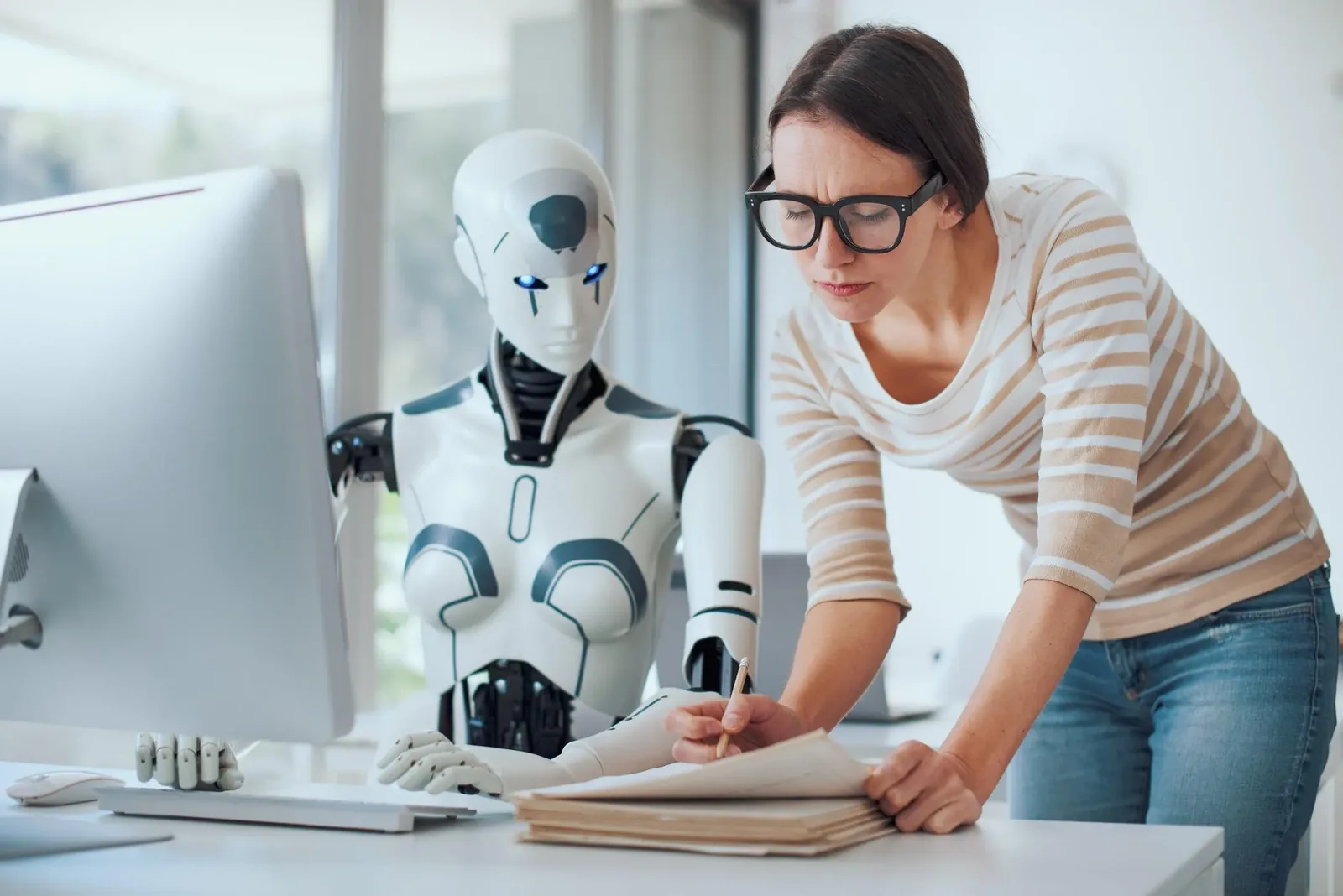
A Shift That Has Happened for the First Time
According to the 2026 Talent Shortage Survey conducted by ManpowerGroup among 39,000 employers in 41 countries, AI skills have surpassed all others for the first time, becoming the most difficult-to-find competency in the world, overtaking traditional engineering and IT specialties. This shift marks a new stage in the prolonged labor crisis: 72% of employers report difficulties in filling vacancies—a figure that has slightly decreased from 74% a year ago, but the problem has not disappeared; it has simply shifted to a new dimension.
Jonas Prising, Chairman and CEO of ManpowerGroup, noted that the rise of AI skills to the top of the list of scarce competencies reflects how rapidly the labor market is changing. According to him, companies are responding by retraining employees and adopting more flexible employment models, recognizing the need to hire people based on their potential and to develop AI literacy throughout the organization so that employees can apply new technologies consciously and confidently. He added that AI does not eliminate jobs but changes their content, and the advantage will go to companies that link productivity growth with career advancement opportunities for employees.
Which Skills Are in Short Supply
Detailed data shows: AI model and application development, with a score of 20%, and AI literacy, with a score of 19%, have taken the positions of the most difficult-to-fill competencies worldwide, while traditional IT and data analytics have dropped to seventh place. In other words, the issue is not a lack of diplomas or basic technical training—the market lacks specialists who combine deep technical knowledge with the ability to apply it to real business challenges.
Technology Exists, People Do Not
The main paradox of the new era is that the barrier has shifted from infrastructure to human resources. Just a few years ago, companies complained about a lack of computing power and access to advanced tools. Today, the situation is different: access to AI platforms has become ubiquitous—open models, corporate copilots, and automation frameworks are multiplying everywhere. But access to technology alone is not enough.
Analysts state this directly: the global labor market is experiencing a structural shortage at the level of advanced technical roles—demand exceeds supply in a ratio of 3:2:1, meaning that for every 1.6 million open AI positions, there are only 518,000 qualified candidates. Forecasts for the coming years do not promise quick relief: demand for such roles is estimated to grow at an average annual rate of 18.5%, reaching 4.2 million positions by 2030, while supply will increase only to 2.1 million—meaning a structural gap of 50% cannot be closed solely through hiring.
A Shortage That Cannot Be Filled by Hiring
This is why ManpowerGroup emphasizes not searching for ready-made talent in the market, but retraining those who are already working within the company. This aligns with the broader labor market picture: according to the World Economic Forum, by 2030, approximately 39% of workers' basic skills will change under the influence of AI, data, and cybersecurity. New technologies will create around 170 million jobs, displacing 92 million existing ones—meaning a net increase of 78 million roles. The problem is that these new roles require competencies that currently do not exist in sufficient quantities.
Why This Matters Right Now
The paradox of the era is that artificial intelligence itself can alleviate the labor shortage—by accelerating training, automating routine tasks, and helping to hire "based on potential." But this works only under one condition: the organization must already have enough people capable of properly implementing and using AI. Technology does not configure itself or explain to the business how to use it profitably. This is still done by people—and it is precisely these people who are currently in shortest supply, more so than servers, models, or budgets.
The Tech on Telegram Follow The Tech on Telegram
Keep up with the latest technology and startup news.
Related reading




More from this author

Article Useful
How to protect your accounts from hacking: 8 settings you should check today
The Tech

Article Useful
500 Global: How the Accelerator Works and Who Can Receive Investments
The Tech

Article Interviews
Game Development in Central Asia: Arkady Moldavski on Developing Reverb and the Growth of the Industry
The Tech

Article Useful
Google, Tesla, BlackRock, and the IMF: Where to Apply for an Internship in Fall 2026
The Tech

News IT
Tesla unveiled the flying electric car Roadster
The Tech

News IT
Intero Biosystems startup won the Startup Battlefield at TechCrunch Disrupt 2026
The Tech