6 discussed AI agents and their capabilities: Dots, Muse, OpenClaw, and others
AI agents are gradually moving beyond traditional chatbots and learning to perform tasks independently — from handling emails and documents to searching for information and interacting with applications. Let's explore several AI agents and their capabilities.
The Tech AI
Get the key points in seconds - a short summary from The Tech AI.
On September 29, 2026, OpenAI introduced Dots based on GPT-6 Astra. Meta's Muse, powered by the Spark model, was released on September 8. xAI launched Grok Bot on August 11. Also described are the open-source projects OpenClaw, Hermes Agent, and MausBot.
Dots by OpenAI
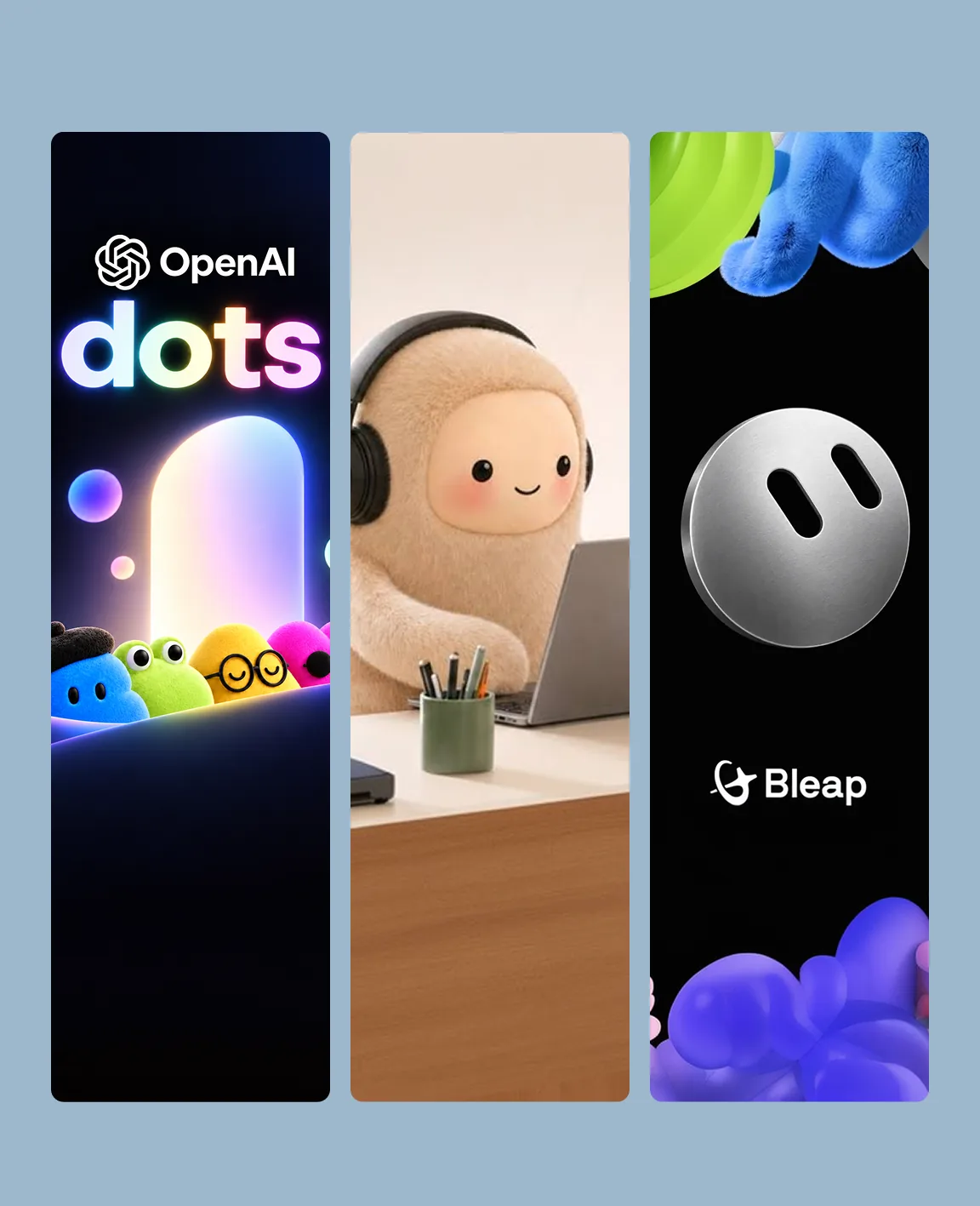
Dots — OpenAI’s AI agents, introduced on September 29, 2026, at the DevDay conference. They operate on the GPT-6 Astra model and utilize a dedicated cloud-based computer with a browser. Through a plugin system, agents can connect to over 4,000 applications and perform tasks in the background.
Users can interact with Dots via ChatGPT, Slack, and Microsoft Teams. For example, an agent can analyze customer reviews, prepare app fixes, update materials when plans change, or create posts based on interview transcripts. As it works, it remembers user preferences and takes their feedback into account.
Users determine which applications the agent can access and which actions it can perform without confirmation. Some sensitive operations, such as changing passwords, remain under human control.
Access to Dots is gradually being rolled out to ChatGPT Pro and Business Premium users in supported countries. Beta access is also available for enterprise clients. The first agent is included in the Pro or Business Premium subscription at no additional cost.
Muse by Meta
Muse — Meta’s personal AI agent, introduced on September 8, 2026. It runs on the Muse Spark model and is designed to handle everyday tasks. Users can assign it tasks such as drafting emails, planning trips, filling out online forms, or finding suitable products.
Muse can break down complex tasks into steps and continue working in the background. Users can choose the agent’s name and avatar, connect necessary applications, and manage permissions.
To perform tasks, Muse uses a separate virtual environment in the cloud. The system also includes additional mechanisms for verifying actions. For payments, it uses Stripe’s Link with one-time card numbers to avoid exposing real payment data.
At launch, Meta offered a free version and paid subscriptions at $20 and $100 per month. Initially, the service was available to adult users in the United States. The company is also considering integrating Muse with smart glasses.
Grok Bot by xAI
Grok Bot — a team of AI agents introduced by xAI on August 11, 2026. Each bot is assigned its own cloud-based computer and can interact with websites, email, and other services. Users send tasks via standard messages, and the agent executes a sequence of actions, seeking approval when necessary.
Grok Bot is suitable for workflows consisting of multiple steps. For example, it can gather information about potential clients, prepare marketing materials, process invoices, or help developers find bugs. The agent also remembers sequences of actions and can repeat them in the future.
Multiple bots can be used simultaneously, with tasks distributed among them. This allows for the automation of various processes, from email management to report generation.
At launch, the beta version was available on computers and iOS devices for SuperGrok, SuperGrok Plus, and SuperGrok Heavy subscribers, as well as users of certain Cursor plans. Enterprise clients have a separate waitlist registration.
Open AI Agents
OpenClaw
OpenClaw — an open-source AI agent created by Austrian developer Peter Steinberger. The project gained widespread traction on GitHub and became one of the notable examples of personal AI agents.
OpenClaw can be installed on a personal computer or server. It supports integrations with messaging apps, including WhatsApp, Telegram, Discord, Slack, and Signal. It can be used to manage email, calendars, search the internet, fill out forms, and process files.
The agent’s capabilities are expanded through skills and additional modules. Users can configure access to applications and choose whether the agent operates directly with files and the system or in an isolated environment.
OpenClaw itself is free. However, using external AI models may require paying for API access or subscribing to a chosen service. Users independently select the model and method for running the agent.
Hermes Agent
Hermes Agent — an open-source AI agent from Nous Research. It is distributed under the MIT license and is designed to perform tasks while considering the user’s previous experience.
One of Hermes’ key features is persistent memory. The agent remembers project contexts, saves useful instructions, and can create new skills based on completed tasks. It supports Telegram, Discord, Slack, WhatsApp, Signal, email, and the terminal.
Hermes can search the internet, interact with browsers, analyze images, and perform scheduled tasks. For more complex processes, additional agents can be launched to work on specific parts of a task.
Hermes is available for macOS, Windows, and Linux. The agent itself is free, but using models and cloud tools may require payment. Through the Nous Portal, a free tier and subscriptions at $20, $100, and $200 per month are available. These provide access to models and additional tools, while cloud execution is billed separately.
MausBot
MausBot — an open-source application for creating a team of AI agents. Each bot can perform a specific role, use its own computer, and connect to required services.
MausBot supports macOS, Windows, and Linux. Agents can be connected to Gmail, Slack, GitHub, Notion, and other applications. Multiple bots can perform tasks in parallel, while users can monitor their work and manage recurring assignments. Voice interaction is also supported.
MausBot can use compatible AI service accounts or API keys. The application is free, and data is stored locally on the user’s device when run locally. For continuous cloud operation, paid plans ranging from $29 to $99 per month are available. The cost of using AI models is not included and must be paid separately.
How AI Agents Differ
Dots, Muse, and Grok Bot offer ready-made solutions for task automation but differ in availability and supported services. OpenClaw, Hermes Agent, and MausBot give users more flexibility for customization, model selection, and organizing their own working environment.
When choosing an agent, it is important to consider not only its features but also the cost of using models, the list of integrations, and data access settings. AI agents can independently perform multi-step tasks; however, results and actions involving money, personal information, or work systems still require human oversight.
The Tech on Telegram Follow The Tech on Telegram
Keep up with the latest technology and startup news.
Related reading




More from this author

Article Useful
How to protect your accounts from hacking: 8 settings you should check today
The Tech

Article Useful
500 Global: How the Accelerator Works and Who Can Receive Investments
The Tech

Article Interviews
Game Development in Central Asia: Arkady Moldavski on Developing Reverb and the Growth of the Industry
The Tech

Article Useful
Google, Tesla, BlackRock, and the IMF: Where to Apply for an Internship in Fall 2026
The Tech

News IT
Tesla unveiled the flying electric car Roadster
The Tech

News IT
Intero Biosystems startup won the Startup Battlefield at TechCrunch Disrupt 2026
The Tech