4 signals from BigTech leaders: what the job market will look like in the AI era
In an interview with Business Insider featuring more than 50 technology leaders, experts shared how artificial intelligence is transforming careers and job roles — from trillion-dollar corporations to startups where young founders are putting their futures on the line.
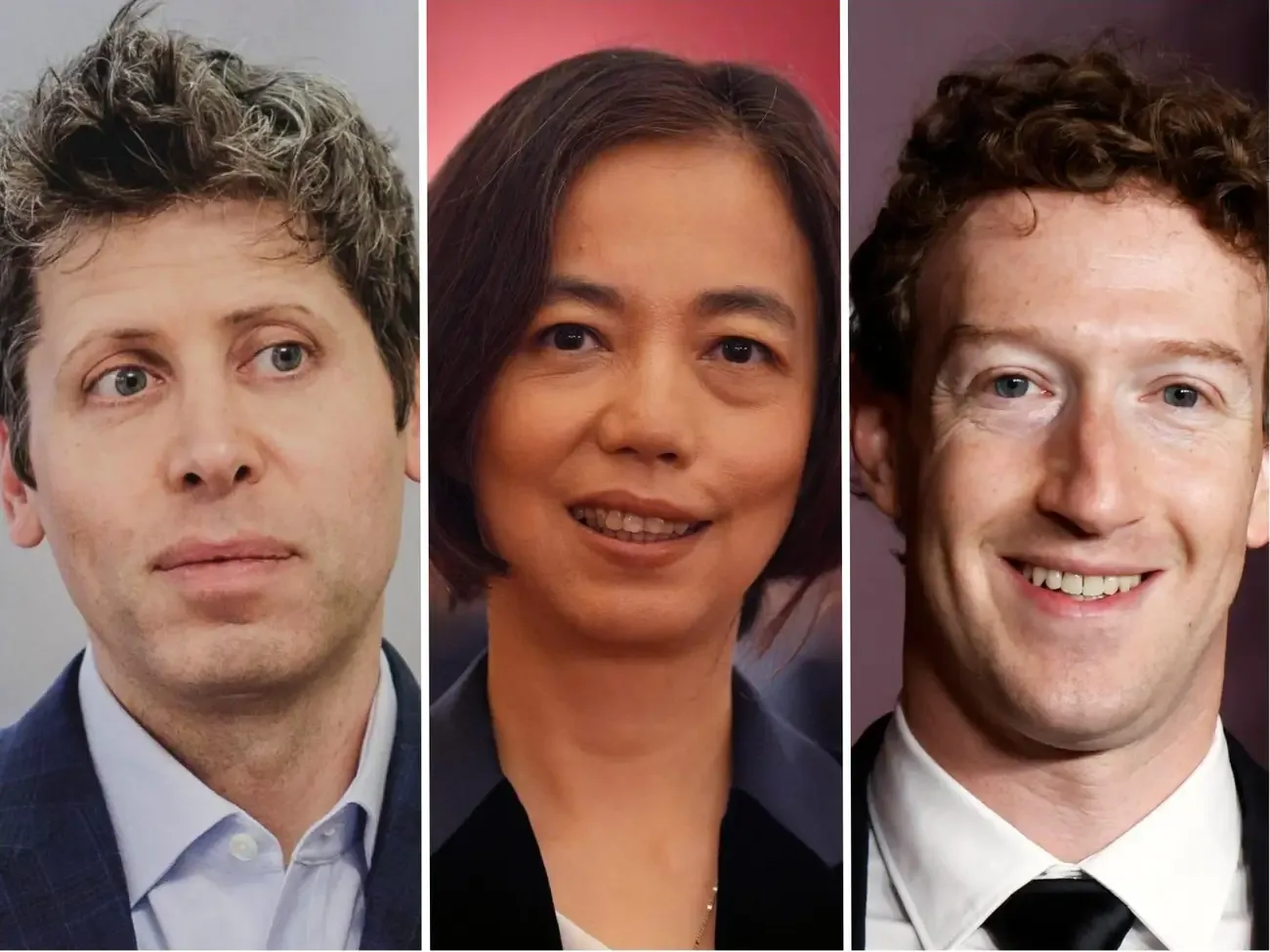
At board meetings, conferences, and podcast interviews, the people building our AI future consistently returned to four main themes:
Use AI, because someone who understands AI better than you can replace you
This idea is most frequently heard among leaders in the technology industry. Nvidia CEO Jensen Huang has repeatedly emphasized over the past year that changes will affect all professions and occur almost instantaneously: “You won’t lose your job to AI, but you will lose it to a person who uses AI.”
Other industry figures share a similar perspective. There is a growing opinion that young professionals have an advantage—they are inherently more comfortable navigating AI tools. OpenAI CEO Sam Altman, reflecting on the future of careers, even noted that he “would feel like the luckiest person in history” if he were graduating from university today, highlighting the greater adaptability of younger workers compared to experienced personnel.
Professor Fei-Fei Li of Stanford University, often referred to as the “godmother of AI,” views the refusal to use such tools as a critical barrier: in her view, engineers who ignore AI simply do not fit the requirements being shaped, particularly within her startup World Labs.
These shifts are already noticeable in everyday work. Specialists from various fields—from accounting to HR—are increasingly adopting AI tools, including vibe coding, to enhance their skills and maintain competitiveness.
Soft skills become more important in the AI era
Another consistent conclusion reached by technology industry leaders is the growing importance of soft skills amid the development of AI.
Peter Schwartz, Chief Futurist at Salesforce, emphasized in a May interview that “the most important skill is empathy, the ability to work with other people,” rather than programming. According to his observations, parental questions about their children’s future increasingly revolve around career choices, yet his recommendation is different: “Learn to work with others.”
LinkedIn has noted a similar trend. Chua Pei Ying, Chief Economist for the Asia-Pacific region, points out that communication and collaboration skills are becoming increasingly in demand—among both experienced professionals and recent graduates.
As AI takes on part of the workload and makes teams more compact, human interaction and the ability to work with people begin to play a key role.
AI is evolving rapidly—and superintelligence is already approaching
Over the course of the year, discussions about the future of AI have become more intense and specific. Technology industry leaders have increasingly spoken about the move toward artificial general intelligence—AGI—and the next stage, superintelligence. AGI is understood as systems capable of competing with human intelligence across a wide range of tasks, whereas superintelligence represents a level surpassing human capabilities.
OpenAI CEO Sam Altman suggested in September that society should prepare for the emergence of superintelligence by 2030. Concurrently, Mark Zuckerberg launched the Superintelligence Labs initiative within Meta, setting a course for the development of next-generation systems. In his logic, it is better to “spend hundreds of billions of dollars inefficiently” than to miss the moment and fall behind in the race for superintelligence.
However, assessments of current progress vary. Databricks CEO Ali Ghodsi allows that the industry may have already approached the AGI level, while Google DeepMind co-founder Demis Hassabis speaks of more cautious timelines—“in the next 5–10 years.”
Despite differences in forecasts, market participants agree on one point: AI development is accelerating at an increasing rate. This is felt even at the user level—new tools are appearing at a high speed: from ChatGPT updates with shopping and image generation features to so-called “AGI cameras” from China. What was perceived at the beginning of the year as something almost magical is gradually becoming a familiar part of everyday life.
Humans must remain at the center of AI
Many technology industry leaders repeatedly return to the issue of human control amid the rapid development of AI.
Mustafa Suleyman, Head of AI at Microsoft, emphasizes that superintelligence should enhance human initiative rather than displace it. In one podcast, he describes his team’s approach as an attempt to create a “humanistic superintelligence,” while simultaneously warning: systems surpassing humans in intelligence will be extremely difficult to constrain and align with societal interests.
Anthropic CEO Dario Amodei also highlights the risks associated with the misuse of technology. In his assessment, although AI lowers the barrier to entry for intellectual labor, the scale of potential threats grows alongside opportunities. In the context of responsible scaling policy, he explicitly points to sensitive areas such as “AI, autonomy, and CBRN—chemical, biological, radiological, and nuclear threats,” adding that this relates to the risks of serious abuse of autonomous systems capable of threatening the lives of millions of people.
At a more fundamental level, Geoffrey Hinton, often called the “godfather of AI,” says the same thing. As systems begin to surpass humans, the key task becomes human safety. In his formulation, it is important to ensure that “when they become stronger and smarter than us, they still care about us.”
The Tech on Telegram Follow The Tech on Telegram
Keep up with the latest technology and startup news.
Related reading




More from this author

Article Useful
How to protect your accounts from hacking: 8 settings you should check today
The Tech

Article Useful
500 Global: How the Accelerator Works and Who Can Receive Investments
The Tech

Article Interviews
Game Development in Central Asia: Arkady Moldavski on Developing Reverb and the Growth of the Industry
The Tech

Article Useful
Google, Tesla, BlackRock, and the IMF: Where to Apply for an Internship in Fall 2026
The Tech

News IT
Tesla unveiled the flying electric car Roadster
The Tech

News IT
Intero Biosystems startup won the Startup Battlefield at TechCrunch Disrupt 2026
The Tech