2026 Venture Capital Market: The Era of Pragmatism and New Opportunities
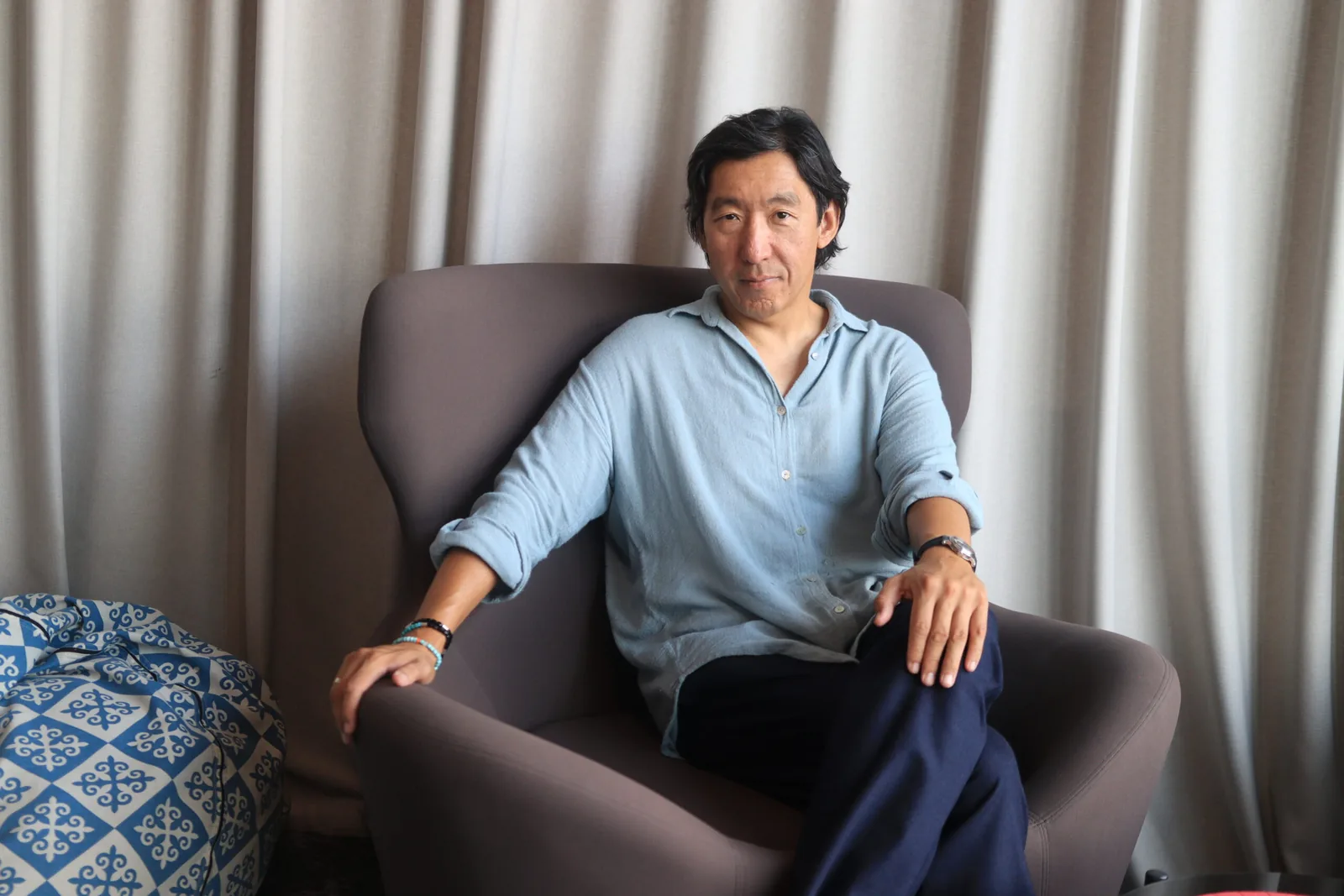
Central Asian countries have become a new arena for venture capital investments. Amid global instability, a startup culture is taking shape here, where efficiency matters more than prestigious pedigrees. In this article, our author, venture investor Bakht Niyazov, explains why Kazakhstan and Uzbekistan are becoming the new pillars of the venture market.
Bakht Niyazov, Almaty, venture investor, LinkedIn
Today, debates surrounding the "bubble" in artificial intelligence often recall the dot-com era. Renowned investor Ray Dalio has pointed out these similarities several times, highlighting the dangerous market dynamics where future expectations have far outpaced current profitability.
However, if we set aside emotions and look at the industry with a clear mind, by 2026 we will see not a crash, but a broad restructuring of the "rules of the game." For prepared players, the current market correction is not a threat, but rather a new opportunity. At least, that is how I see it.
The technology is real, but the valuations are not
The main paradox of our time is that artificial intelligence has already become the backbone of the economy. Not everyone understands this, however. For example, capital flowed into this sector too aggressively. As a result, a gap has emerged in the industry: company valuations seem to live in a world separate from real performance metrics. Investors continue to pour money into startups that lack viable business models, hoping to reap profits.
Does the person's name matter, or the product?
Last year revealed an interesting phenomenon in the market: investors began to place more emphasis on the founders' backgrounds than on the business itself. Previously, startups founded by specialists who had worked at OpenAI or Google could attract billions in investments even before securing their first paying customer.
Meanwhile, there are projects on the market that are undervalued but operating profitably. For instance, companies like DeepL or Writesonic have millions of users and steady revenue. Despite this, investors value them significantly lower than well-known startups that are operating at a loss.
As a result, the market has split into two: on one side are the "infrastructure giants," and on the other are ordinary startups forced to prove every bit of revenue they generate.
A strategy for sustainable survival
My personal stance for 2026 is based on strict risk management. I want to prepare the startups I support so that they can survive even if the AI "bubble" bursts and a venture winter begins.
Therefore, in my venture studio, together with partners Maxim Tolmachev, Anes Kaldybaev, and Pavel Koktyshev, we are introducing a new approach to supporting startups. Within Justart, we focus on creating utilitarian products that deliver tangible profits. In my view, current risk management requires startups to establish a market where they can generate steady revenue. Such a foundation allows the company to confidently invest in R&D and complex technologies.
At Justart, we help teams implement a precision strategy: low costs for the MVP, rapid market entry, and a focus on concrete results. Our only limitation is that we cannot work with too many projects simultaneously. Therefore, we are currently launching a new acceleration program through MOST. This time, it will be in Uzbekistan. New market, new partners, new approaches. I believe the work will be productive!
Regional stability: Kazakhstan and Uzbekistan
In the context of global instability, my focus is consciously shifting to Central Asia. The expansion of the MOST fund into Uzbekistan can strengthen the stability of our entire business model. We want to diversify our portfolio through another rapidly growing economy. The first deal has already been successfully made.
I believe that working in Kazakhstan and Uzbekistan brings significant benefits to the region. In our case, startup founders are forced to operate efficiently from day one. There is no room for wasteful spending of capital. It is precisely this pragmatism that makes Central Asian projects attractive. We maintain a focus on the global market, but risk management now takes center stage.
Conclusion
I look at 2026 with optimism. The market is currently going through a phase of cleansing itself from excesses. Artificial intelligence is our new foundation, but this time, stable business models will be built on top of it, not empty promises.
Through the tools of the Justart studio and the capabilities of the MOST fund, we are choosing a targeted investment strategy. I believe we will find new leader projects specifically in Central Asia that stand out for their efficiency and ability to operate in real economic conditions. Venture business will continue to be a game for those who can remain calm in any situation.
The Tech on Telegram Follow The Tech on Telegram
Keep up with the latest technology and startup news.
Related reading



More from this author

Article Useful
How to protect your accounts from hacking: 8 settings you should check today
The Tech

Article Useful
500 Global: How the Accelerator Works and Who Can Receive Investments
The Tech

Article Interviews
Game Development in Central Asia: Arkady Moldavski on Developing Reverb and the Growth of the Industry
The Tech

Article Useful
Google, Tesla, BlackRock, and the IMF: Where to Apply for an Internship in Fall 2026
The Tech

News IT
Tesla unveiled the flying electric car Roadster
The Tech

News IT
Intero Biosystems startup won the Startup Battlefield at TechCrunch Disrupt 2026
The Tech