16 startups from Kazakhstan and Uzbekistan presented their technologies at TechCrunch Disrupt 2026
Aset Abdualiev, founder and CEO of Silkroad Innovation Hub. Strong tech companies are emerging in Kazakhstan and Uzbekistan, with much to offer the international market. Participation in TechCrunch Disrupt gives founders the opportunity to showcase their products, receive feedback, and build business connections. For the fourth year, we are organizing the Silkroad Pavilion so that more teams from our countries can take advantage of these opportunities and grow in the U.S. market.
The Tech AI
Get the key points in seconds - a short summary from The Tech AI.
Kazakhstani and Uzbek startups presented technological solutions at TechCrunch Disrupt 2026 in San Francisco (October 13–15). The Silkroad Pavilion featured 14 companies from Kazakhstan, two from Uzbekistan, and Astana Innovations. The Kazakhstani startup WeGlobal AI made it into the top three winners of the Road to TechCrunch Startup Battlefield competition and qualified for the TechCrunch Startup Battlefield 200.
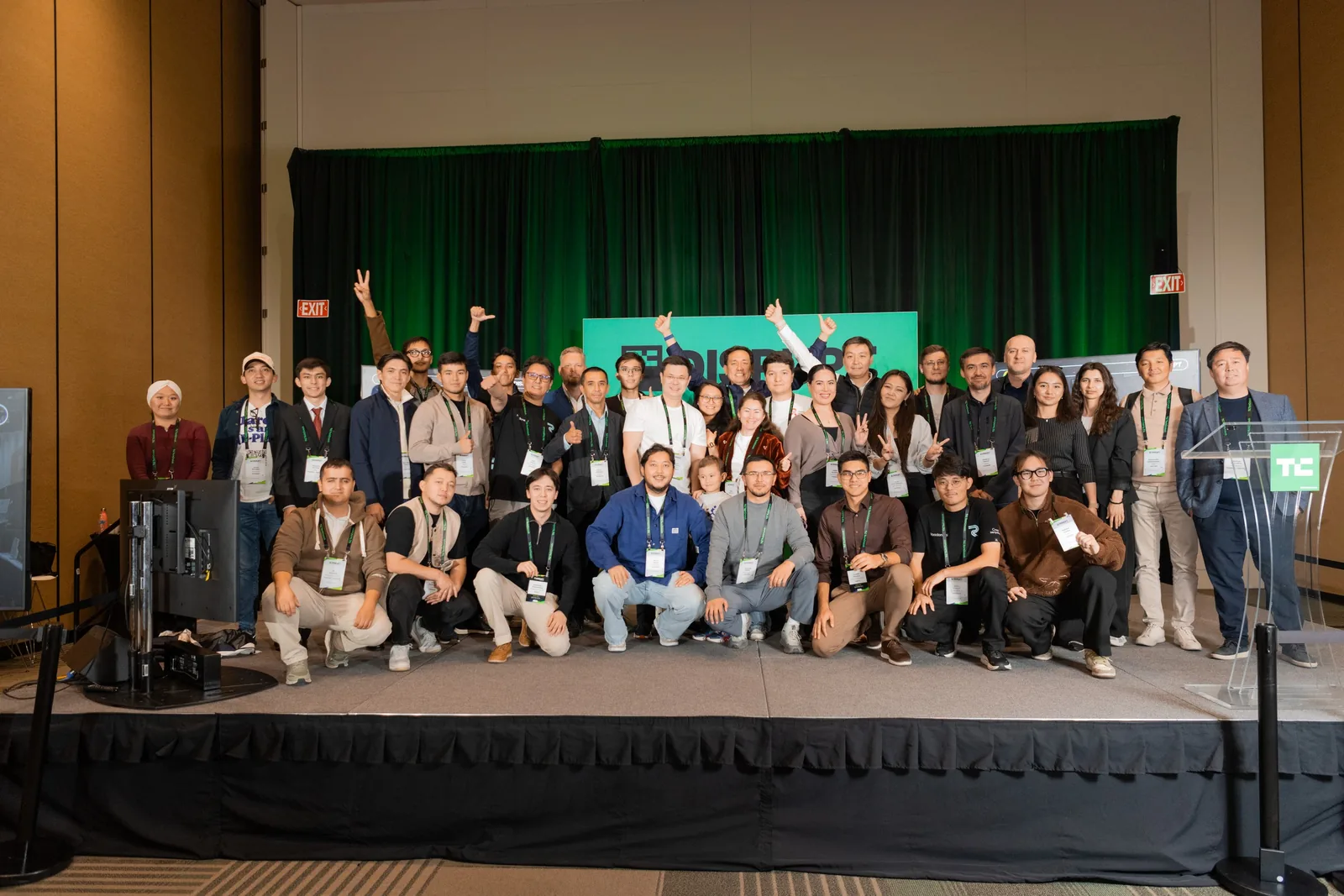
Startups from Kazakhstan and Uzbekistan presented their technological solutions at one of the world’s leading technology conferences, TechCrunch Disrupt 2026, which took place from October 13 to 15 in San Francisco, California, USA. Sixteen companies were showcased in the Silkroad Pavilion, organized by Silkroad Innovation Hub.
Partners of the Silkroad Pavilion included Astana Hub, IT Park Uzbekistan, NU Impact Fund, and the Sustainable Innovation and Technology Foundation (SITF).
The joint pavilion featured 14 startups from Kazakhstan and two from Uzbekistan. They presented innovations in artificial intelligence, healthcare, education, unmanned technologies, satellite communications, and smart city solutions. Alongside the startups, Astana Innovations participated in the pavilion, presenting its Smart City initiatives and the digital development of Astana. Over three days, participants demonstrated their technological solutions to conference attendees, including representatives of technology companies, investors, and startup founders, and delivered pitches on the Pitch Showcase Stage.
In addition to the Silkroad Pavilion participants, the Kazakh startup WeGlobal AI also exhibited at the conference. The startup became one of the three winners of the Road to TechCrunch Startup Battlefield competition, representing Kazakhstan, and qualified for the TechCrunch Startup Battlefield 200, where it presented its technologies to an international audience.
Participation in TechCrunch Disrupt demonstrates that Kazakhstan and Uzbekistan are becoming more prominent as countries developing their own technologies. The teams presented competitive products to an international audience, capable of solving client problems beyond the region. For both countries, this is an opportunity to showcase their developments and simultaneously strengthen Central Asia’s position on the global technology map.
Among the pavilion participants were Expresso and Cryptic AI, who traveled to the US as part of the Alchemist Silkroad x Silicon Valley Residency 2026 accelerator program, jointly implemented by Astana Hub, IT Park Uzbekistan, Alchemist, and Silkroad Innovation Hub. Participation in TechCrunch Disrupt became an important part of their immersion in the Silicon Valley technology ecosystem.
Silkroad Innovation Hub has organized the pavilion at TechCrunch Disrupt for the fourth consecutive year. In 2023, 14 startups participated; in 2024, 24; and in 2025, 20. In 2025, the pavilion became the largest among the seven country and regional pavilions at the conference.
From Road to TechCrunch to TechCrunch Startup Battlefield 200
In addition to the Silkroad Pavilion participants, WeGlobal AI from Kazakhstan, Cerberus AI from Uzbekistan, and LOOQ from Japan also participated in TechCrunch Disrupt 2026. These teams were the three winners of the regional Road to TechCrunch Startup Battlefield competition, qualified for the TechCrunch Startup Battlefield 200, and presented their technologies as part of this program.
WeGlobal AI develops an AI platform for schools that helps monitor students’ psychological well-being, conduct career guidance, and build individual pathways for university admissions.
Cerberus AI develops an AI-based cybersecurity platform that automatically detects and verifies vulnerabilities in corporate applications and IT infrastructure, helping companies mitigate risks.
Kazakhstan: from medical AI to satellite communications
Kazakhstan was represented by 14 startups developing products for business, medicine, education, and urban infrastructure.
Mirai Tech — Gulnur Kalimuldina. A platform for professional sports teams that combines artificial intelligence with proprietary sensors. The solution helps analyze athlete performance metrics and make data-driven decisions.
Aeglos — Daulet Kaldybek. Autonomous AI-powered drones with an onboard autonomy system capable of executing commands in natural language.
Cryptic AI — Amangeldy Zhumabekov, Galizhan Tolybayev, Aidana Muratova. An AI platform for combating money laundering in the crypto industry. The system verifies crypto wallets and tracks the movement of illicit funds within minutes, reducing investigation times.
SpaceLab — Arman Bekembaev, Dauren Aubakirov, Sabina Asanbekova. Satellite communication solutions for remote monitoring and emergency response, including in areas with limited access to terrestrial infrastructure.
OST Engineering — Vitaliy Ostapchuk. Developer of Clear Sky, a system for cleaning urban air, monitoring its quality, and software for managing environmental indicators.
RoadOne, R1 Technologies — Bektas Orazgali, Aidar Sadyrov. An AI-based fuel control system for fleets that helps prevent theft and reduce transportation costs.
ZhanCare.AI — Anuar Kappar. An AI platform for clinics that automates patient interactions at all stages and internal processes of medical institutions.
Artisan Education — Nurken Bolatov. A self-directed STEM learning platform for schoolchildren, centered around practical work with real equipment.
Sarqyt — Mustafa Kasym, Ansar Keles, Amirkhan Sarybbek. A service helping cafes and bakeries reduce food waste. Users can purchase sets of unsold food at half price.
Astana Innovations — Akzhunis Baktybay, Turarbek Bazarbaev. A development institute under the Astana City Akimat that promotes urban innovations and the digital transformation of the capital.
TAZA Kazakhstan — Zhadra Kanapina. Drones for washing windows of high-rise buildings and fighting fires, reducing the need for human work at heights.
Topfm.io, top.kz — Almas Kebekbayev. A real estate management and maintenance company using artificial intelligence and supported by Chevron.
OmniMammo — Beibit Abdikenov, Nurzhan Zhaksalykov. A multimodal AI platform for the diagnosis and prediction of breast cancer.
Expresso — Nurtay Abilgaliev, Anzor Israilov. An AI-based platform that connects workplace applications and automates tasks requiring interaction between them.
Uzbekistan: online education and AI for business
Uzbekistan was represented in the Silkroad Pavilion by Darstop and Perceptional.
Darstop — Shukhrat Fayziev, Ma’ruf Yusuf. An educational platform with online classes for children from migrant families. The project helps children learn remotely with teachers.
Perceptional — Sardor Akhmedov. Developer of Jared, an AI employee that performs tasks across various company work tools.
The Tech on Telegram Follow The Tech on Telegram
Keep up with the latest technology and startup news.
Related reading






More from this author

News
Now in ChatGPT, you can hide conversations with a PIN code or Face ID
The Tech

News
Anthropic has introduced Claude Duet, a personal AI agent for business
The Tech

News
Autonomous taxis from inDrive, Pony.ai, and NVIDIA will appear in Astana
The Tech
Article Useful
How to choose a startup accelerator: what programs offer besides investments
The Tech
News IT
AICONF-2026: NVIDIA, OpenAI, and SpaceXAI will come to Dushanbe
The Tech

Article Startups
How a startup from Baku combined more than 30 AI tools for moms into one app
The Tech