Results of the closed round table AI & Technology For Good
The IT infrastructure market is experiencing a period that can only be described as turbulent. A sharp increase in prices for server equipment, licenses, and related solutions

The Tech AI
Get the key points in seconds - a short summary from The Tech AI.
On May 5, 2026, a closed roundtable discussion titled "AI & Technology For Good" took place at GITEX Central Asia, organized by Women in Tech Kazakhstan. Participants noted the financial sector's transition toward systemic transformation: by 2028, up to 15% of decisions will be made by AI agents, and in Kazakhstan, more than 65% of transactions are conducted through digital ecosystems. Discussions covered the growth of IT spending, the development of stablecoins, the Data Center Valley project, and support for women-led startups.
On May 5, 2026, as part of the international GITEX Central Asia exhibition, a closed roundtable titled AI & Technology For Good took place, bringing together executives of leading technology, financial, and FinTech companies in the region, organized by Women in Tech Kazakhstan.
The event was held in the format of a closed session with participation from C-level representatives of the banking sector, FinTech companies, investment funds, and international organizations.
Context: From technology implementation to industry transformation
Participants noted that the financial sector has moved from the pilot project stage to systemic transformation. According to international research, by 2028, up to 15% of decisions in business processes will be made using AI agents.
In Kazakhstan, more than 65% of transactions are already conducted through digital ecosystems, making the country one of the most developed markets in terms of FinTech and banking service integration.

Key discussion topics
Asel Marchenko, Deputy Chairman of the Board, JSC "National Payment Corporation"
Artificial intelligence has already become a key factor in the transformation of the financial sector; however, most organizations remain at the level of isolated implementations, failing to achieve strategic impact. In the coming years, competitive advantage will be determined not by the scale of the business, but by the speed of AI integration into key processes and data quality. The transition to autonomous AI systems will fundamentally change operational models and the industry structure. Those players who can combine technological implementation with effective risk management and corporate governance will win.
Lazzat Satieva, Chairman of the Board, JSC "Eurasian Bank"
The AI boom is rapidly increasing the cost of IT infrastructure, and the only sustainable response is technology diversification and moving away from dependence on a limited circle of vendors. Banks cannot compensate for the growth in IT costs at the expense of clients—therefore, they are forced to fundamentally change their technology spending model. Currently, equipment prices are rising on average one to two times a month, and even local representatives of manufacturers do not guarantee delivery timelines or contractual prices, let alone ordinary suppliers. This, of course, causes certain inconveniences, especially in large organizations where procurement procedures take a long time.

Dinara Arslan, Deputy Chairman of the Board, JSC "Altyn Bank"
Kazakhstan takes a proactive position in the development of digital finance. And such hybrid models, which combine the speed of stablecoins with the reliability of banks, will shape the future of finance. Stablecoins are not an alternative to traditional finance; they are its evolution.
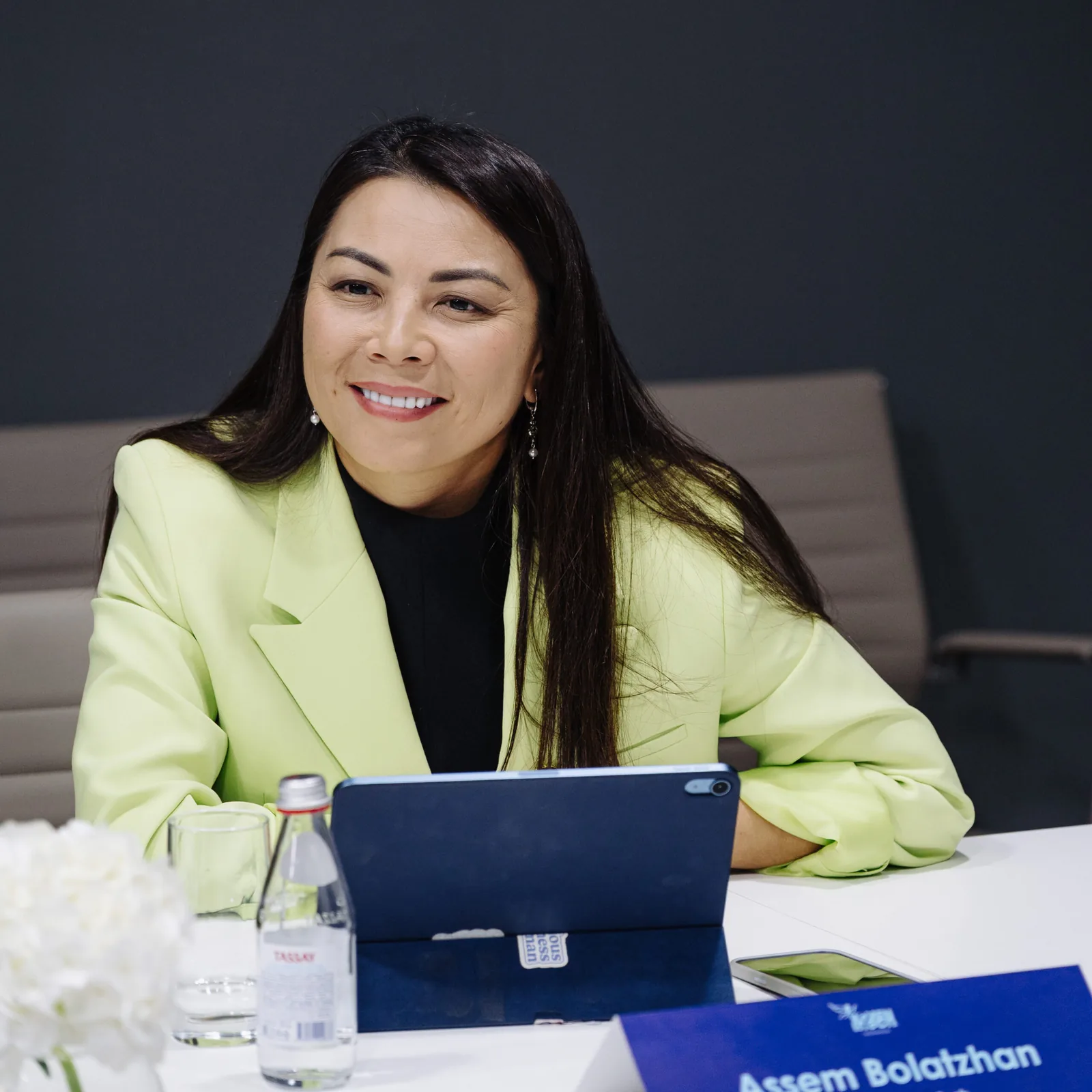
Asem Bolatjan, Advisor to the Deputy Prime Minister - Minister of AI and Digital Development of the Republic of Kazakhstan
Issues of AI development go deeper into questions of developing energy potential to create our own Kazakh infrastructure. For these purposes, the state is implementing the Data Centers Valley project, as well as developing a special Data Embassy.
Alina Trukhina, Managing Partner, Utopia Capital Management
AI creates opportunities. Corporations provide scale. Venture capital turns both into corporate value by building partnerships that turn technological breakthroughs into scalable businesses.
Saida Jarbolova, Board Member, JSC "Alatau City Bank"
From the perspective of the impact of new technologies on corporate governance, the supervisory and strategic functions of its elements will remain. However, the continuous flow of information will significantly reduce information asymmetry between corporate management, the Board of Directors, and stakeholders, which will lead to changes in traditional protocols. With the presence of an advisor for directors in the form of an AI agent, the ability for strategic thinking, wisdom, and commitment to sustainable growth will come to the fore compared to sector-specific knowledge. At the same time, boards of directors will need to rapidly increase their IT expertise to guide organizations through technological transformation in a world of new opportunities, risks, and dilemmas. It is necessary to ensure that new requirements do not become a barrier for women, as managerial roles in IT are still predominantly held by men. Kazakhstan is quite a unique country in this regard, with a relatively good representation of women in leadership positions—which should be valued and developed.
During the speech by Tatiana Reshetnik, it was noted that the integration of non-financial products into banks' digital ecosystems has become an effective model for interacting with medium, small, and micro-business clients in Kazakhstan. Banks such as "Bank CenterCredit", "KMF Bank", and "Halyk Bank" are already developing digital educational, consulting, and service solutions, going beyond classic financial services. Support from the European Bank for Reconstruction and Development, including through the MicroMentor and Women in Micro Business programs, strengthens this approach and contributes to the sustainable development of SMEs. This model allows banks to act not only as financial institutions but also as full-fledged partners in entrepreneurs' growth.

Rinata Ilyubaeva, Advisor to the CEO, Astana Hub
Supporting startups, especially women-led startups, is a difficult process, and as a hub, we face many challenges. AI implementation in banks and corporations has not yet fully proven its operational efficiency, while we are observing a boom in investments in the West in AI SaaS projects. Systemic collaboration between banks and corporations with startup ecosystems on a regular basis is needed so that ideas can reach effective implementation faster.
The Tech on Telegram Follow The Tech on Telegram
Keep up with the latest technology and startup news.
Related reading
More from this author

The launch of Global Tech Weekend 2027 will take place in Tbilisi.
Business Cup, NASA Space Apps, and Startup Week: Opportunities for Startups in November 2026

How a guy from Kashkadarya created an IT startup and attracted $40,000 in investments