# From Surkhandarya to Silicon Valley: Asad Usmonov on his journey in IT
While his peers are finishing high school, Asad Usmonov is already working as a Lead Engineer at the American AI startup Numeo. The Tech, together with IT Park Uzbekistan, spoke with Asad about what inspires him, how he overcomes challenges along the way, and his future plans. This material was prepared with the support of IT Park Uzbekistan.
**Asad Usmonov, city — Surkhandarya, Lead Engineer at Numeo, [LinkedIn]()**
**About Me**
My interest in programming arose unexpectedly — after an interview with [**IT Park** hackathon]() in Surkhandarya. This gave me confidence and my first real freelance orders through [**Fiverr**](). I built a portfolio, secured a steady income, and was able to support my family without leaving my hometown.
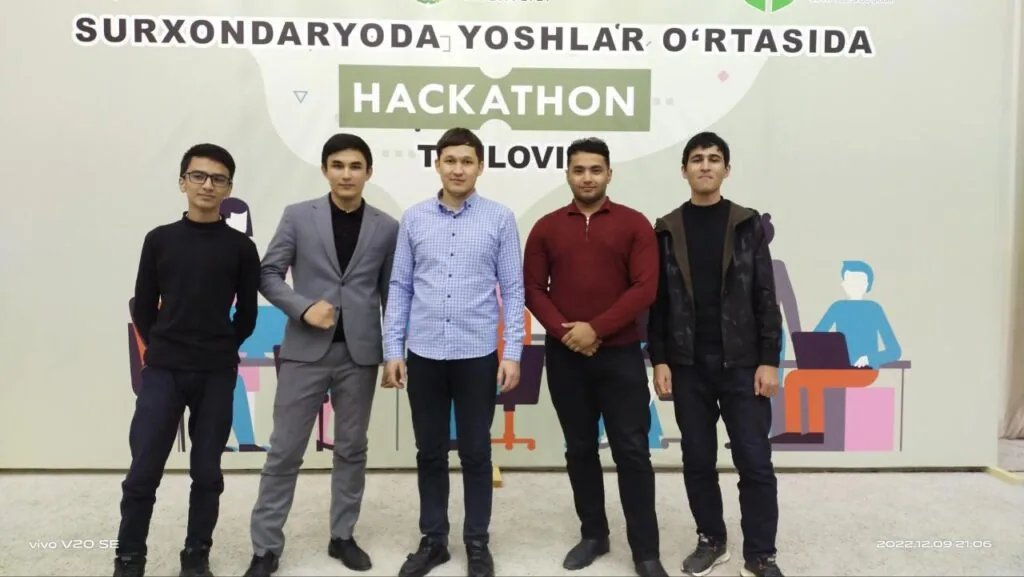 At some point, I realized: I want to work in a field where I can genuinely change how people interact with technology. That’s how I came to **Numeo.AI** — an American startup creating next-generation voice agents.
At Numeo, leadership is not just a fancy title. We have five principles that I follow every day:
1. Customer orientation — user experience always comes first.
1. Responsibility — I take ownership of tasks and see them through to completion.
1. Bias for action — I make decisions quickly.
1. Big-picture thinking — I don’t limit myself to local goals.
1. Invent and simplify — I always think about how to make things better and simpler.
Following these principles, I gradually took on more responsibilities and eventually grew into the role of Lead Engineer.
Why Voice AI? Voice is the most natural way of communication. At Numeo.AI, we create voice agents that can do more than just respond to commands — they can execute entire chains of actions. For example, a single voice command can trigger a truck search, check the cargo, contact the sender, and optimize the route considering traffic.
Challenges of Developing Voice AI for the US
The biggest challenge is achieving a natural-sounding voice. There are several hurdles:
— generating speech that doesn’t sound robotic, especially in long conversations
— delays in telephone networks — any pause can ruin the feeling of “live” communication
— loss of audio quality due to compression in telephone lines.
Nevertheless, recent breakthroughs, such as models from Sesame, show that we are close to making AI voices indistinguishable from human ones.
I am confident that in 5–10 years, voice AI will not just answer questions, but anticipate needs and act proactively. It will learn to understand emotions and respond to them empathetically — and that will change everything.
 **Where and How I Learn**
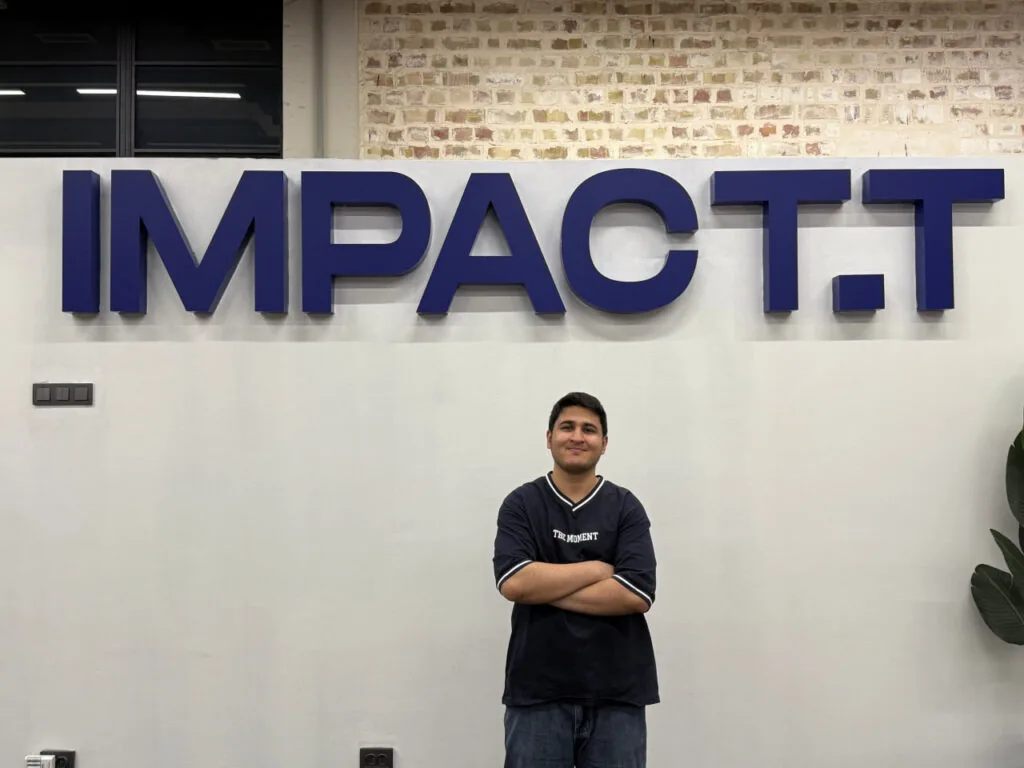
I only finished school, but I continue learning every day. My main principle is to learn from everything and everyone: articles, videos, open-source. At every stage, I had mentors nearby. I especially want to highlight the CTO of **Numeo.AI**, Bekhzod Kodirov — his mentorship helps me handle complex tasks and look at what we do in a new way.
Since joining **Numeo**, I rarely attend networking events unless they are large-scale. This is because our daily work itself feels like a massive educational experience.
Every team has its own “call room” where everyone stays connected throughout the day. We don’t just chat — we work with screen sharing enabled, allowing us to observe how more experienced developers solve problems in real time. When someone finds something new or interesting, they immediately share it with the rest of the team. And if someone gets stuck, there’s always someone who will help right there in the call. This creates a collaborative and fast-learning environment.
**Environment**
My environment formed gradually over time. In the very beginning, it was just me and my older brother — we knew little about IT, but together we studied and discovered new things. Besides my brother, there was no one around me from the tech field. So, I actively sought like-minded people — first through online communities, and later at the companies where I worked.
Currently, my main circle is the **Numeo** team. We work about 15 hours a day, 6 days a week, and this has created a strong bond between us. I wake up, spend the whole day with my colleagues, and go to sleep — it feels less like work and more like a professional family. I try to surround myself with people who share the same passion for technology and AI development.
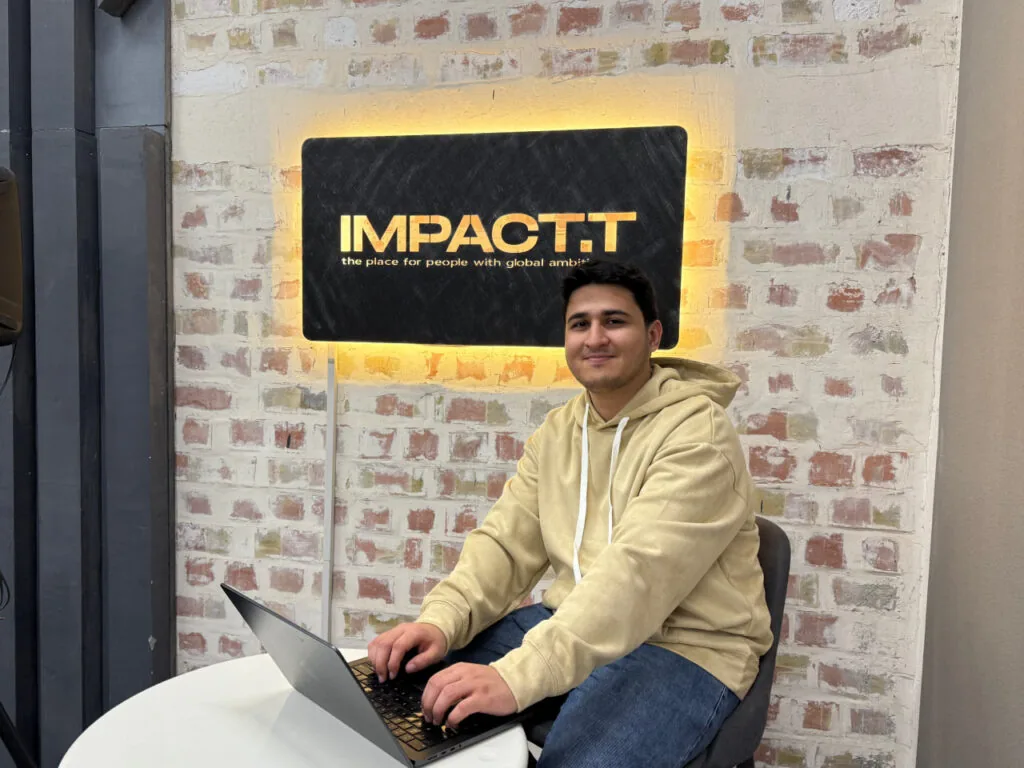 Aside from family, I hardly communicate with people outside of IT. My entire life is surrounded by developers, engineers, and tech enthusiasts. Whether it’s work, study, or even casual conversations — everything happens within the world of technology.
The best way to find like-minded people in IT is to start where you work. You spend most of your time with your team, so choosing the right company is crucial. It’s important that the corporate culture supports learning, collaboration, and growth — being surrounded by the right people will accelerate your progress the most.
Besides work, online communities and forums are incredibly useful. For example, when we were improving our voice assistant at **Numeo**, I was active in the **LiveKit** community on Slack. I shared ideas, asked questions, and even helped another developer who needed support. Later, we noticed that their voice assistant quality was noticeably higher than ours, so we reached out for help — and they assisted us. This led to further collaboration on integrating voice assistants with phone calls, and ultimately, we built a strong connection. Such relationships start with simple activity, willingness to help, and curiosity.
**Where I Spend My Free Time**
Currently, I hardly have any free time. We work about 15 hours a day, 6 days a week at **Numeo**, so almost all my time is fully dedicated to what we’re building. On the seventh day, our team has a rule — to read a book, and skipping it is only allowed if there’s a valid reason. On Monday morning stand-ups, we all share what we’ve learned from the book.
Nevertheless, working non-stop is impossible. To avoid burnout, I usually go for a long walk when I need to clear my head. This is my way of completely disconnecting and recharging. One such walk can give me energy for another three to four days of intense work.
**Plans**
In the coming years, I want to launch my own startup in the field of AI automation and Agentic Workflows. I’m confident that voice technologies and artificial intelligence will play a key role in transforming business processes worldwide — and I want to be at the forefront of these changes.
Advice for young developers:
1. Write more code — practice solves everything.
1. Learn English — without it, you lose access to the best resources and community.
1. Be consistent — don’t chase speed, persistence is what matters.
1. Build real projects — tutorials are important, but without practice, it’s just theory.
1. Networking — communicate, seek out people you can learn from. LinkedIn and GitHub are your best friends.
And most importantly: don’t wait for someone to create opportunities for you — create them yourself.